

Pet Customs Clearance Process Explained
July 8th, 2026 | Uncategorized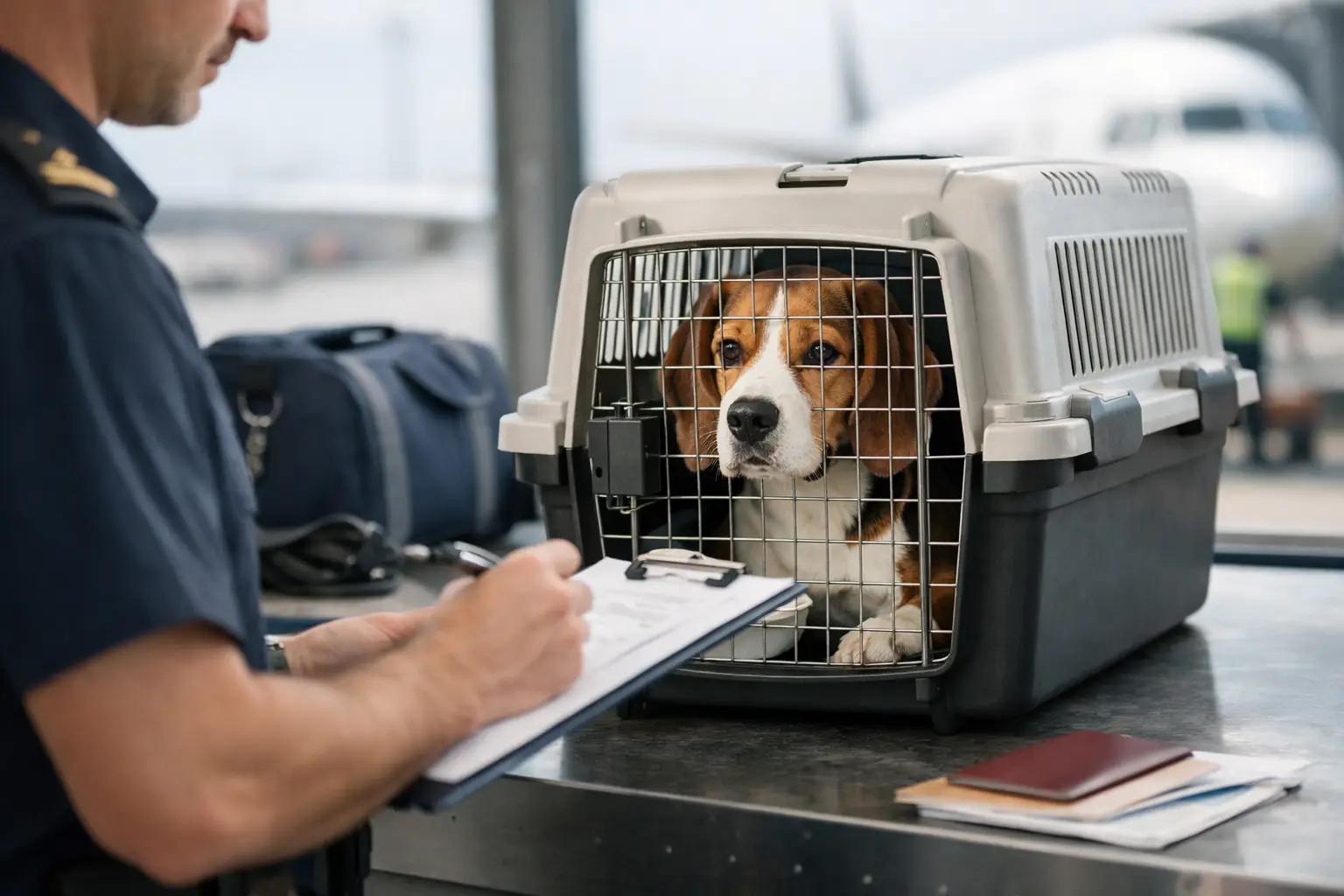
When your pet lands in a new country, the flight is only part of the journey. The pet customs clearance process is often where stress spikes for families – not because it is impossible, but because small paperwork errors, timing issues, or country-specific rules can create delays when your pet should be heading home with you.
For most pet owners, customs is the least familiar part of international relocation. Airline booking gets attention. Crate training gets attention. Veterinary appointments get attention. Then arrival day comes, and suddenly there are import permits, health certificates, customs entries, inspection windows, and questions about who is allowed to collect the pet and when. That is why clearance planning should start well before departure, not after wheels up.
What the pet customs clearance process actually includes
At a practical level, the pet customs clearance process is the official release of your pet by the destination country’s authorities after they review the required import paperwork and confirm the animal meets entry conditions. Depending on the country, that may involve agricultural authorities, customs officials, airport cargo staff, veterinary inspectors, or more than one agency.
This process usually starts before travel. Many countries require documents to be prepared in a specific order, sometimes within narrow validity windows. A health certificate might need to be issued within a certain number of days before departure. An import permit may need approval before the airline will accept the booking. Some destinations require vaccinations, parasite treatments, microchip verification, or laboratory testing well in advance.
On arrival, officials compare the pet, the transport booking, and the documents. If everything aligns, clearance can move quickly. If a date is wrong, a vaccine does not meet timing rules, or the consignee details do not match, the process can slow down fast.
Why delays happen even when owners prepare well
Most customs delays are not caused by carelessness. They happen because international pet transport has moving parts that do not always line up neatly.
A document may be technically correct but not formatted the way a destination authority expects. A flight reroute can change the airport handling process. A country may update entry rules with very little notice. Some destinations treat dogs and cats differently. Others have separate procedures for accompanied pets, manifested cargo, service animals, or pets entering with owners who hold different residency statuses.
There is also a simple reality many families do not hear early enough: clearance rules are not universally standardized. Two countries can ask for a health certificate and vaccination record, yet interpret timing, endorsements, and release procedures very differently. That is why copying a friend’s checklist from another move often causes more confusion than clarity.
Documents that commonly affect customs clearance
The exact paperwork depends on the route, species, and destination, but several document categories come up again and again.
A valid microchip record is often the anchor document because it ties the pet to the rest of the file. Vaccination records, especially rabies, must match that identity record exactly. The international health certificate must usually be completed within a specific timeframe and, in some cases, endorsed by the appropriate government authority before departure. Some countries also require an import permit, proof of parasite treatment, laboratory results such as a rabies antibody titer, and owner identification or residency documents.
Airline paperwork matters too. Customs and airport handlers often need the air waybill, arrival notice, or cargo release details before they can proceed. If the pet is traveling as manifested cargo rather than excess baggage, the release chain is usually more formal and can involve additional coordination with cargo terminals.
What matters most is not just having the documents, but having a clean, consistent file. Names, microchip numbers, vaccine dates, owner details, and destination information should match across every record.
How arrival day usually works
Arrival day can look calm from the outside and still involve several handoffs behind the scenes. After landing, your pet may be transferred to an animal holding area, a cargo terminal, or a designated inspection point. Officials or handlers then review the file, confirm the shipment details, and determine whether an inspection is required before release.
In some countries, clearance can happen the same day within a few hours. In others, release depends on office hours, prior notice requirements, staffing, or veterinary inspection availability. If a flight arrives late at night, on a weekend, or during a holiday period, your pet may need to stay in approved care until the next clearance window opens.
This is one of the most important it depends moments in pet relocation. Families often assume that once the plane lands, pickup is immediate. Sometimes it is. Sometimes it is not. The route, airport, species, document type, and local authority procedures all shape what happens next.
Pet customs clearance process for cargo vs accompanied pets
One area that causes confusion is the difference between pets traveling as accompanied baggage and pets traveling as cargo. The pet customs clearance process can vary significantly between the two.
With accompanied travel, the owner may present documents directly after landing, and the pet may be released through a passenger-facing inspection process if the destination allows it. With cargo travel, release often happens through the cargo terminal, where customs entries, terminal handling procedures, and authorized collection requirements can be more structured.
Cargo is not automatically a problem. In many international moves, it is the only compliant or practical option. But it does mean families should expect more formal handling steps and should not assume the passenger arrival experience will apply.
Common reasons pets are held at customs
A customs hold does not always mean a major crisis, but it always deserves immediate attention. The most common issues include missing permits, mismatched microchip numbers, invalid vaccine timing, unsigned or improperly endorsed health certificates, incorrect consignee details, or failure to meet pre-arrival notification rules.
Sometimes the issue is procedural rather than medical. The pet may be perfectly eligible to enter, but the release cannot happen until a broker, handler, or authorized representative submits the next required step. In other cases, officials may request clarification from the issuing veterinarian or ask for additional review of laboratory results.
The good news is that many holds are preventable with early planning and document review. The harder truth is that once a pet is already in transit, fixing errors becomes more stressful, more time-sensitive, and more dependent on local response times.
How to prepare for a smoother customs experience
The best preparation starts by working backward from the arrival country, not forward from your departure city. Entry rules at destination should drive the vaccination timeline, permit application, document issuance dates, and flight planning.
It also helps to think of customs clearance as a coordinated chain rather than a single checkpoint. Your veterinarian, airline, export authority, arrival handler, and customs or agricultural officials all touch the process. If one step is out of sync, the last step tends to expose it.
Build in time for document review before departure. Confirm whether originals are required. Verify who is listed as consignee and who is legally allowed to collect the pet. Check airport office hours at destination. Ask what happens if the flight is delayed. These are not minor details. They are often the difference between a same-day reunion and an avoidable hold.
For families moving to or from Central America, this planning becomes even more valuable because procedures can differ not just by country but by airport and authority workflow. That is where specialized coordination can reduce both risk and uncertainty.
When professional customs support makes sense
Some relocations are straightforward enough for owners to manage directly. Others are not. If your route involves cargo handling, destination permits, rabies titer rules, special import conditions, multiple flight segments, or high-stakes timing around a family move, professional support is often worth it for accuracy alone.
An experienced relocation partner can help align the veterinary timeline, airline requirements, and arrival clearance steps before travel begins. They can also monitor document consistency, coordinate with local handlers, and respond quickly if an authority asks for clarification. For families already balancing housing, schools, visas, and international logistics, that support can remove a significant emotional burden.
At Planet Pet Relocation, this is where careful planning matters most. The goal is not only compliance on paper, but a calm, well-managed arrival for the pet and the people waiting on the other side.
A process built around one outcome
The pet customs clearance process is not just administrative. It is the final checkpoint before your pet is back in your arms, out of the airport, and on the way to a new home. When it is handled well, it feels orderly, predictable, and safe. When it is treated as an afterthought, small errors can become long days.
If you are planning an international move, give customs the same attention you give the flight itself. A clear timeline, accurate paperwork, and the right arrival support can make that reunion happen the way it should – with less waiting and a lot more peace of mind.

