

Airline Cargo Versus Pet Courier for Your Pet
September 22nd, 2026 | Uncategorized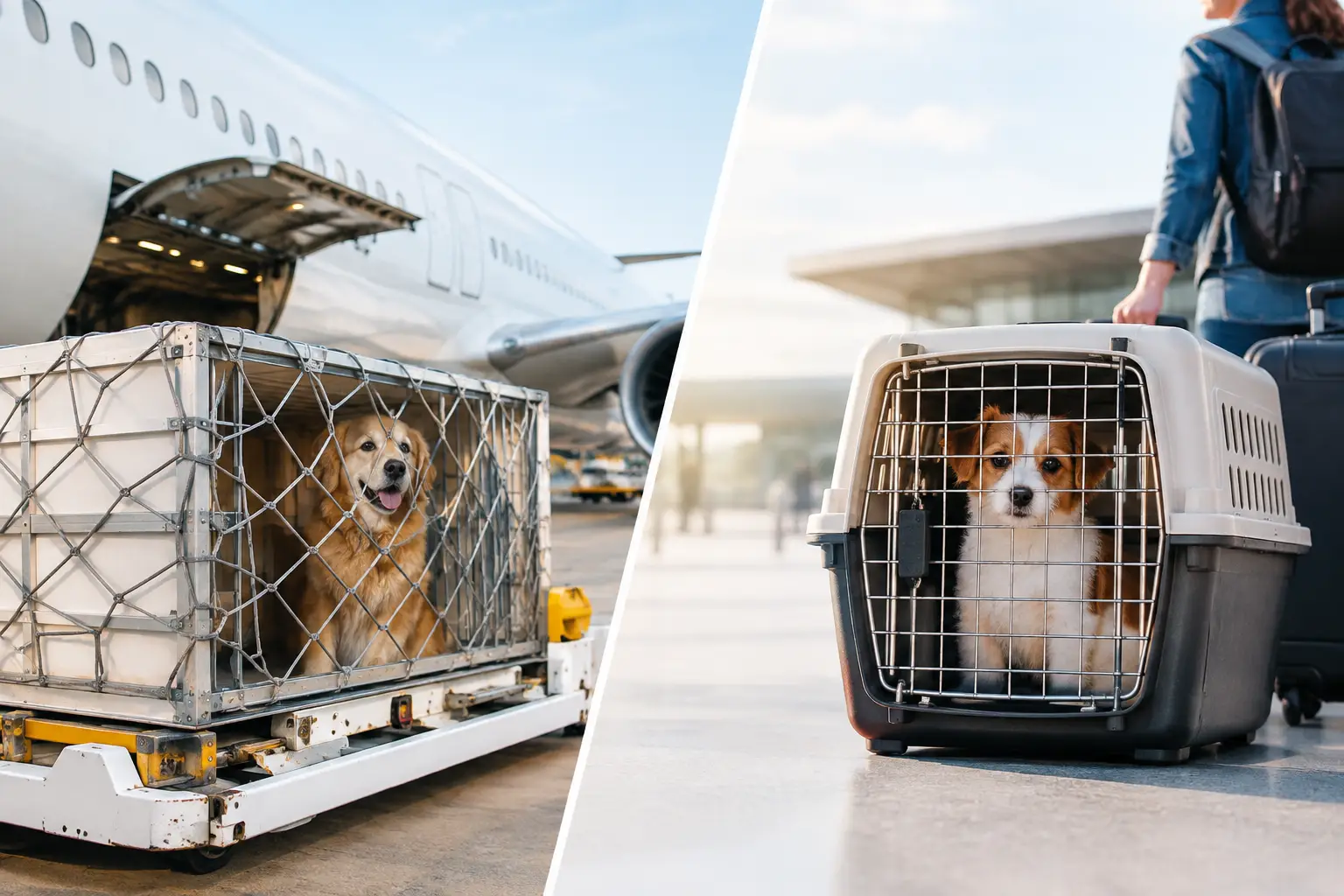
A pet’s flight may take only a few hours, but the arrangements behind it can begin weeks or months earlier. When comparing airline cargo versus pet courier, the most important distinction is not simply how your pet travels. It is who is responsible for coordinating the details that make travel safe, compliant, and manageable from one home to the next.
For many international moves, airline cargo is the actual transportation method. A pet courier or relocation specialist is the professional team that may organize that air transport while also handling the route, veterinary timeline, airline requirements, export paperwork, customs process, and ground transfers. Understanding that difference helps families choose support that matches their pet, destination, and level of complexity.
What airline cargo means for pet travel
Airline cargo is a regulated transport service used by airlines to carry pets in an approved travel kennel, typically in a temperature-controlled section of the aircraft. It is commonly required for larger dogs and is often the available option when a pet cannot travel in the cabin with its owner.
Cargo travel is not automatically unsafe or uncaring. When an itinerary is properly selected and airline requirements are followed, it is a well-established way to move pets internationally. Airlines have rules for kennel construction, ventilation, water containers, breed restrictions, weather conditions, check-in timing, and documentation. The challenge is that these requirements can vary by airline, airport, aircraft type, and route.
With a cargo-only arrangement, the owner may be responsible for many of the moving parts. That can include securing the booking, confirming kennel specifications, obtaining veterinary certificates, coordinating airport drop-off, preparing import permits, and arranging collection after arrival. For a straightforward move, this may be workable. For a multi-country relocation or a destination with strict entry procedures, one missed detail can create a serious delay.
What a pet courier service adds
A pet courier service can mean different things, so it is worth asking exactly what is included. Some people use the term to describe a flight nanny who accompanies a small pet in the cabin. Others mean a full-service pet relocation provider that coordinates the complete move, whether the pet travels in cabin or as airline cargo.
For international relocations, a professional courier or relocation team typically serves as the coordinator and advocate for the pet’s journey. The team evaluates viable routes, confirms airline acceptance, reviews documentation deadlines, prepares owners for kennel training, and arranges pickup, delivery, customs support, or both.
This service is especially valuable when the trip involves a connection, a change in airlines, a remote destination, an import permit, or a country-specific health requirement. A courier does not eliminate regulations, but experienced coordination reduces the chance that families discover a requirement too late.
At Planet Pet Relocation, the goal is to take the operational burden off the family while keeping them informed about the decisions that affect their pet’s travel. That is particularly helpful for moves to and from Central America, where airline schedules, local procedures, and government requirements may require close coordination.
Airline cargo versus pet courier: the practical difference
The simplest way to think about airline cargo versus pet courier is this: cargo is the transport channel, while a courier service is the management and care structure built around the journey.
An airline is responsible for accepting the pet according to its policies and transporting the animal on the confirmed flight. It generally does not manage your destination’s import file, schedule a veterinarian, track every documentation milestone, or arrange a safe handoff to your new residence. Some airlines provide helpful guidance, but their role is limited to their part of the itinerary.
A pet relocation professional looks at the journey as a whole. That means assessing whether a particular route is appropriate, not merely available. A direct flight may be preferable, but a route with a carefully planned connection can sometimes be the better option if it avoids extreme weather, unsuitable aircraft, difficult transit rules, or a rushed transfer.
The difference becomes clearer at arrival. Depending on the country, a pet may need inspection by an agricultural authority, clearance through customs, or release from a cargo facility before the family can be reunited. A courier service can prepare for those steps in advance and coordinate local handling. Without that support, owners may need to navigate an unfamiliar airport process immediately after their own international flight.
When airline cargo may be the right choice
Booking airline cargo directly can make sense when the trip is relatively simple and the owner is comfortable handling travel administration. For example, a family may have a direct route, a healthy pet with straightforward documentation, clear airline guidance, and confidence in completing import and export requirements independently.
It can also be appropriate when an owner has previously completed a similar move and understands the timing of veterinary appointments, government endorsements, and airport procedures. Even then, it is wise to verify every detail close to departure. Airline policies and destination rules can change, and a previous experience may not reflect current requirements.
Direct cargo arrangements require time, careful organization, and a willingness to take responsibility for the full chain of travel. If the airline changes the flight, a document needs correction, or arrival clearance is delayed, the owner must be prepared to respond quickly.
When a pet courier is the better fit
A courier or full-service relocation provider is often the better choice when the move has several dependencies or little room for error. Families relocating on a fixed work assignment, moving with children, selling a home, or arriving in a country for the first time may not have the capacity to manage a detailed pet import process alongside everything else.
Support is also valuable for pets with special considerations. Large breeds, brachycephalic breeds, senior pets, anxious travelers, and animals moving during warmer or colder months may require more careful route selection. A qualified veterinarian should always advise on a pet’s fitness to travel, while the relocation team can use that information to build a responsible logistics plan.
International requirements add another layer. Rabies vaccinations, microchip records, health certificates, parasite treatments, import permits, and rabies FAVN titer testing may each have specific timing rules. For dogs entering the United States from countries affected by high-risk rabies rules, CDC requirements can add further documentation and planning considerations. A professional coordinator helps align these requirements with the planned travel date rather than treating paperwork as a last-minute task.
Questions to ask before choosing either option
Before deciding, ask whether the service is responsible only for the flight booking or for the end-to-end relocation. Confirm who will review documents, who will communicate with the airline, who will meet the pet at arrival, and who will help if a flight schedule changes.
You should also ask how the route is selected. The best plan is not always the shortest itinerary on paper. Responsible planning considers aircraft type, connection time, seasonal temperatures, airport facilities, airline pet policies, and the pet’s individual needs.
Finally, clarify communication expectations. International pet travel can feel stressful because owners are trusting others with a beloved family member. Clear updates, realistic timelines, and a designated point of contact make a meaningful difference throughout the process.
The right choice depends on the whole journey
There is no single answer for every pet. Airline cargo can be an appropriate and safe method of transport, particularly when the route and regulations are straightforward. A pet courier service provides a broader layer of planning, coordination, and on-the-ground support when the move is more complex or when the family wants experienced guidance from departure through arrival.
The best decision starts with an honest assessment of your pet’s needs, the destination’s rules, and how much of the process you can confidently manage yourself. A well-planned trip gives your pet more than a confirmed flight – it gives your family a calmer path to being together again in your new home.

