

Dog Passport vs Health Certificate Explained
August 29th, 2026 | Uncategorized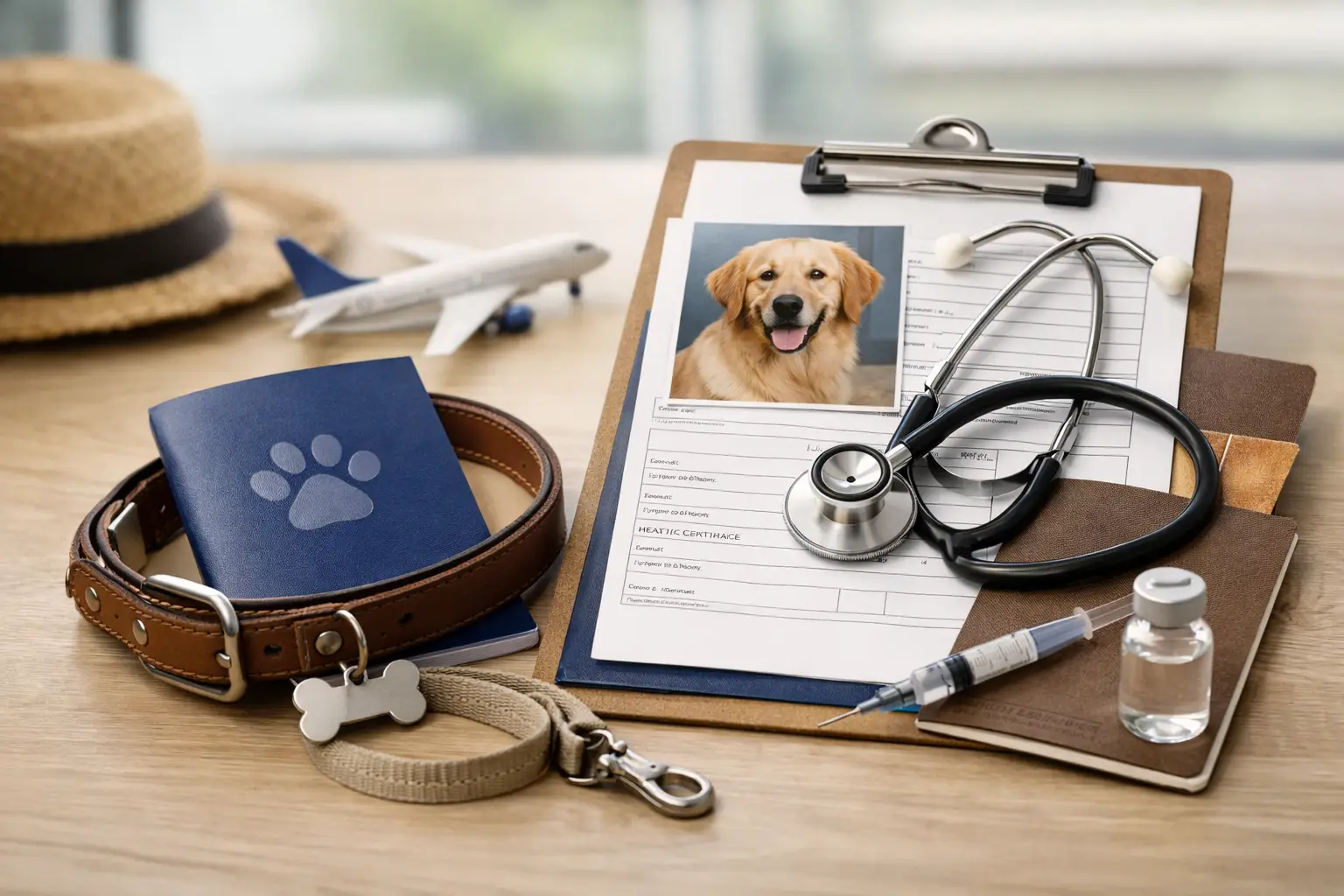
A missed signature, an expired rabies record, or a health exam performed a few days too early can stop a pet’s journey before it begins. The difference between a dog passport vs health certificate is often misunderstood, especially by families preparing for an international move. They are not interchangeable documents, and relying on the wrong one can create airline delays, denied entry, quarantine concerns, or a stressful separation from your dog.
For most international relocations, the question is not which document is better. It is which documents your destination, transit countries, airline, and return plan require – and when each one must be issued. A careful documentation plan protects your dog’s welfare and gives your family a far smoother travel day.
Dog passport vs health certificate: the key difference
A dog passport is a long-term identification and vaccination record recognized within certain travel systems. The best-known example is the EU Pet Passport, which is issued by authorized veterinarians in eligible European Union countries. It typically records the dog’s microchip number, rabies vaccination details, owner information, and, when required, certain parasite treatments.
A health certificate, often called an international health certificate or certificate of veterinary inspection, is a time-sensitive document prepared for a specific trip. It confirms that a veterinarian examined the dog, reviewed required vaccinations and treatments, and found the animal healthy enough to travel. Depending on the route, it may need to be endorsed by a government veterinary authority after the veterinarian completes it.
The simplest way to remember the difference is this: a passport follows the dog over time, while a health certificate supports a particular journey. A passport may be useful or mandatory in the countries that recognize it. A health certificate is commonly required for international entry even when a passport exists.
For U.S. pet owners, there is no universal U.S. dog passport that replaces destination-specific import paperwork. A vaccination booklet, a microchip registration record, or an airline booking confirmation is not a substitute for an official health certificate.
Why a passport alone may not get your dog cleared
It is easy to assume that a document labeled “passport” covers every border. In practice, border authorities focus on their own import rules. They may require an original health certificate issued within a narrow window before arrival, proof of current rabies vaccination, a compliant microchip, import permits, treatment records, laboratory results, or an official endorsement.
A valid EU Pet Passport can simplify movement between certain European countries when it is correctly completed and the rabies vaccination remains valid. But it does not automatically satisfy requirements for travel from the United States to another region, travel into the United States, or travel to countries outside the passport system.
Likewise, a health certificate does not create permanent travel clearance. Its validity may be only a few days or weeks, depending on the destination and the date of arrival. If your travel date changes, the certificate may need to be reissued. That can affect appointment availability, government endorsement timing, airline acceptance, and connecting flights.
What an international health certificate usually confirms
Each country uses its own form and standards, so there is no single certificate that works everywhere. Still, an international health certificate commonly includes your dog’s identifying information, such as breed, sex, age, color, and microchip number. It also documents the rabies vaccine, veterinary examination, parasite treatments when applicable, and the address of the owner or consignee.
The veterinarian is certifying more than general good health. They are confirming that the dog meets the stated requirements of the importing country based on records available at the examination. For that reason, even small inconsistencies matter. A microchip number with one missing digit, a different spelling of the owner’s name, or dates written in an unacceptable format can trigger questions at check-in or on arrival.
Some destinations require government endorsement after the veterinary appointment. This step verifies the certificate for export and may involve a national agriculture or animal health authority. It is not an administrative detail to leave until the last minute, particularly during holiday periods or when travel involves a remote departure location.
The records that often matter alongside either document
A passport or certificate is only part of the travel file. Your dog may also need supporting records that establish eligibility for the route. Requirements vary, but the most common documents include rabies vaccination certificates, microchip documentation, import permits, airline paperwork, treatment certificates, and laboratory reports.
Rabies rules deserve special attention. Countries may specify the type of vaccine, the dog’s age at vaccination, the waiting period after vaccination, and how long the vaccination remains valid. If a rabies vaccination was given before the microchip was implanted, some destinations may not accept it as valid for import purposes.
For travel to countries with strict rabies controls, a rabies antibody titer test may be required. The test itself is only one part of the process. The microchip must be scanned correctly, the rabies vaccination must meet the destination’s rules, the blood draw must occur at the right time, and some countries impose a waiting period after the sample is taken.
Travel involving the United States can add another layer. Current U.S. entry requirements may depend on where the dog has been during the previous months, the dog’s age, vaccination history, and whether the country is classified under specific rabies-risk rules. Requirements can change, so a plan based on a previous trip or a friend’s experience may no longer be accurate.
Timing is where many travel plans go wrong
The biggest distinction in the dog passport vs health certificate decision is timing. A passport may be issued and maintained well before travel. A health certificate is generally tied to a short pre-departure period. Starting too late can make compliance impossible; completing the certificate too early can make it expire before arrival.
Begin by confirming the destination requirements, then work backward from the arrival date. This reveals whether your dog needs a microchip, rabies vaccination, titer test, import permit, or other document with a long lead time. Only after those milestones are clear should the final health examination and certificate appointment be scheduled.
Avoid assuming that the departure date is the only date that matters. Some countries calculate certificate validity based on entry, while airlines may review paperwork at check-in. A delayed flight, overnight connection, or rerouting can create a problem if the document window is extremely tight. Route planning and documentation planning should happen together.
This is especially relevant for relocations involving Central America, where requirements may differ significantly by country and where onward travel, customs procedures, or flight connections can affect the document plan. The same dog traveling on a direct route may need a different preparation schedule than one transiting through another country.
How to prepare without creating last-minute stress
Start with a single, consistent file for your dog. Keep original vaccination certificates, microchip information, prior travel documents, and clear copies of every record. Make sure names, dates of birth, microchip numbers, and vaccination dates match across documents before a veterinarian prepares the final certificate.
Then confirm four practical points: the destination’s import requirements, the airline’s pet travel rules, transit-country conditions, and the requirements for returning home later. An airline may have crate, breed, weather, routing, or check-in restrictions that are separate from government entry rules. Government clearance does not guarantee airline acceptance, and airline approval does not replace customs documentation.
If your dog has traveled before, review the old documents carefully rather than assuming they remain sufficient. A prior health certificate will almost always be expired for a new trip. A passport may still be useful, but vaccination entries, endorsement standards, and destination rules must still be current.
When professional coordination makes a meaningful difference
International pet travel is not difficult because one form is complicated. It is difficult because several parties must agree at once: the veterinarian, government authority, airline, customs officials, destination regulators, and the family responsible for the dog’s care. A document that looks complete can still fail if it was issued in the wrong sequence or does not match the chosen route.
For families relocating across borders, experienced coordination can help turn a moving target into a clear plan. Planet Pet Relocation supports pet owners with route planning, document preparation guidance, airline coordination, export and arrival procedures, and welfare-focused travel arrangements. The goal is not simply to get paperwork completed, but to help your dog arrive safely, compliantly, and ready to reunite with the people they trust.
Your dog does not need a stack of documents for the sake of paperwork. They need the right documents for the exact journey ahead. Give the process enough time, protect the originals, and let every travel decision support one outcome: a calm, safe arrival for a valued member of your family.

