

How to Arrange Pet Airport Pickup Safely
October 28th, 2026 | Uncategorized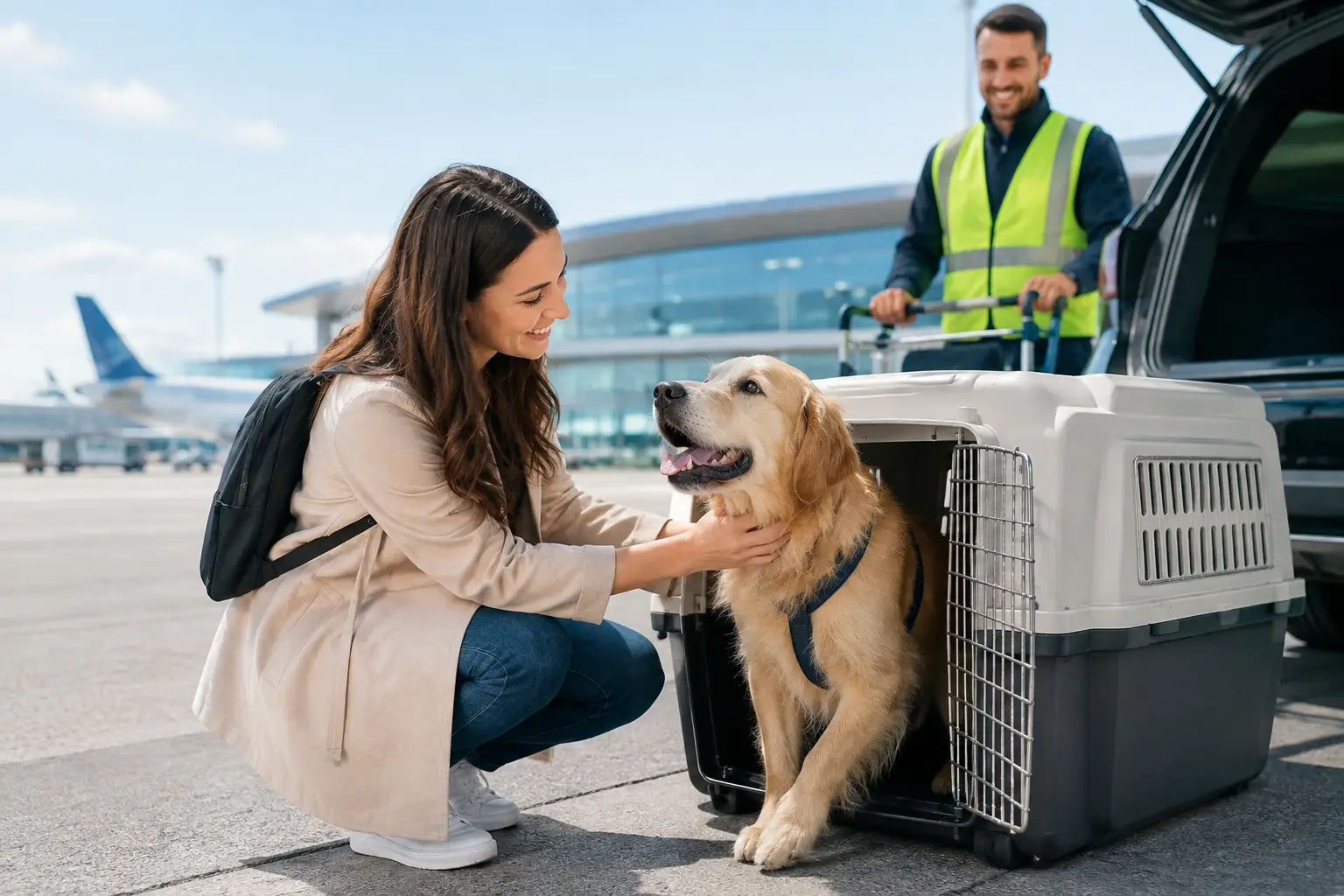
A pet can arrive on the right flight and still face a difficult final mile. Cargo release windows, customs procedures, inspection requirements, and airport access rules can turn a long-awaited reunion into hours of uncertainty if no one is prepared at the destination. Knowing how to arrange pet airport pickup before travel day helps protect your pet’s comfort, keeps paperwork moving, and gives your family a clear plan for the moment they land.
For international moves, airport pickup is not simply asking a friend to meet a flight. It is a coordinated handoff between the airline, cargo facility, government authorities, customs, and the person authorized to receive your pet. The details vary by airport and destination, so the strongest plan starts well before departure.
Start With the Arrival Process, Not the Flight Time
The scheduled landing time is only one part of the timeline. Pets traveling as air cargo are usually transferred from the aircraft to a designated cargo or animal-handling facility. They may need to be checked in by the airline, presented for veterinary or agricultural review, and cleared through customs before release.
Ask the airline or your relocation coordinator where pets are released at the arrival airport. At many international airports, the collection point is not the passenger terminal. The authorized receiver may need to go to a cargo terminal, a bonded warehouse, or an animal inspection area, sometimes located on a separate part of the airport property.
Build flexibility into the pickup plan. A flight that lands on schedule can still have delays in unloading, document processing, aircraft handling, or government inspection. Arriving too early may mean waiting outside a restricted facility, while arriving too late can add unnecessary holding time for your pet. A practical approach is to confirm the facility’s instructions in advance, then monitor the flight and wait for confirmation that the pet is ready for release before heading to the counter when possible.
Confirm Who Is Allowed to Collect Your Pet
Airlines and authorities do not always release a pet to any person who can show identification. The receiver may need to be the owner named on the air waybill, an approved agent, or a person carrying a signed authorization letter. Customs may also require the importer of record to be present or may allow a representative to act on the owner’s behalf only with specific documentation.
Confirm this in writing before the pet departs. The pickup person should understand exactly what identification, authorizations, and original documents they need to bring. A photo of a document is not always accepted when an original health certificate, import permit, or customs form is required.
If the owner cannot be at the airport, appoint a receiver who is comfortable navigating formal procedures and communicating with airport staff. This should be someone reachable throughout the arrival window, not a person who may be in a meeting, on another flight, or unable to answer local calls.
Prepare a Dedicated Arrival Document Folder
Keep the paperwork together in a clearly labeled folder, with digital copies stored separately as a backup. Requirements differ by country, species, and travel route, but the arrival package commonly includes the air waybill, import permit if required, veterinary health certificate, vaccination records, microchip information, customs paperwork, and the receiver’s identification and authorization.
For dogs entering the United States from certain countries, additional CDC requirements can apply based on the dog’s travel history and country of origin. Rabies documentation, microchip records, and import forms must align precisely. Other destinations may require an import permit issued before travel, a rabies antibody titer result, or an official endorsement of the veterinary certificate.
Small inconsistencies can create large delays. A misspelled owner name, an incorrect microchip number, or a certificate issued outside the permitted time frame may trigger extra review. Compare each document against the booking and import requirements before departure, rather than discovering a mismatch at the cargo desk.
Coordinate Customs and Veterinary Clearance Early
International pet arrivals are subject to the laws of the destination country, not just airline policy. Airlines transport pets, but they do not replace customs brokers, animal health authorities, or import clearance professionals. Some airports allow clearance directly at arrival; others require advance notices, broker arrangements, or inspection appointments.
This is especially relevant for moves to and from Central America, where procedures can vary significantly between countries and sometimes between airports. Local holidays, limited inspection hours, and weekend operations may affect when a pet can be released. A late-night arrival may be workable at one airport and unsuitable at another if the necessary authority is unavailable.
Before confirming the route, verify whether your pet will need customs entry, agricultural inspection, quarantine review, or a pre-arranged release process. If the flight itinerary changes, review the plan again. A new arrival airport, an unexpected overnight connection, or a diverted flight can change which authorities are involved.
A full-service pet relocation team can coordinate these details with local partners, airlines, and authorities. Planet Pet Relocation supports families with arrival planning, customs handling, documentation coordination, and welfare-focused travel arrangements so there is a prepared person and process waiting at the destination.
Plan the Pickup Around Your Pet’s Comfort
The person collecting your pet should arrive with more than paperwork. They should have a safe, climate-controlled vehicle ready, along with clean water, a bowl, absorbent pads, waste bags, a leash or harness if appropriate, and a light towel or blanket. Do not open the travel crate at the airport unless an official instructs you to do so or it is safe and permitted in a fully secure area.
Even a normally calm pet may be tired, thirsty, or unsettled after travel. Keep the first interaction quiet and steady. Speak softly, offer water when appropriate, and avoid a crowd of excited greeters around the crate. A direct trip to the final home or a pet-friendly overnight location is usually better than adding errands or social visits to an already demanding day.
For warm climates, avoid leaving the crate in direct sun while waiting for the vehicle. For cold climates, prepare blankets and minimize time outdoors. Large dogs, senior pets, brachycephalic breeds, pets with medical needs, and animals arriving after a long itinerary may require more specific handling arrangements. Discuss those needs with the transport team before the journey begins.
How to Arrange Pet Airport Pickup When Plans Change
The most useful airport pickup plan is one that includes a backup. Airlines can change flight numbers, delay cargo release, reroute animals, or hold a shipment for document review. The pickup person, owner, airline contact, and relocation coordinator should all have each other’s current phone numbers and know who is responsible for each decision.
Set communication checkpoints: confirmation when the pet has departed, when the aircraft has landed, when the pet has reached the facility, when clearance has begun, and when release is approved. Not every airport provides each update automatically, but agreeing on the desired communication flow reduces stressful guesswork.
Have a contingency plan if the pet cannot be released that day. Ask in advance where the pet will be held, who provides care, whether the facility is temperature-controlled, and what documentation or authority action is needed the following day. This is not a sign that something will go wrong. It is responsible planning for a process that depends on several organizations working in sequence.
Give the First 24 Hours Some Breathing Room
Once your pet is home, resist the urge to make the reunion busy. Offer water, a familiar meal if appropriate, a calm bathroom break, and a quiet place to rest. Time-zone changes, unfamiliar scents, and travel fatigue can affect behavior temporarily. Some pets want immediate reassurance; others need space before they settle.
Watch for signs of distress such as repeated vomiting, breathing difficulty, severe lethargy, or an inability to stand comfortably. If anything feels concerning, contact a local veterinarian promptly and share your pet’s travel details. For most pets, a low-pressure first day and a predictable routine are the best welcome.
A well-organized pickup gives your pet’s journey a gentle finish. When the right documents, people, vehicle, and clearance plan are in place, the airport becomes what it should be: the last stop before your companion is safely back with the family.

