Panama pet relocation

Pet Cargo Versus Accompanied Travel Explained

September 8th, 2026 | Uncategorized
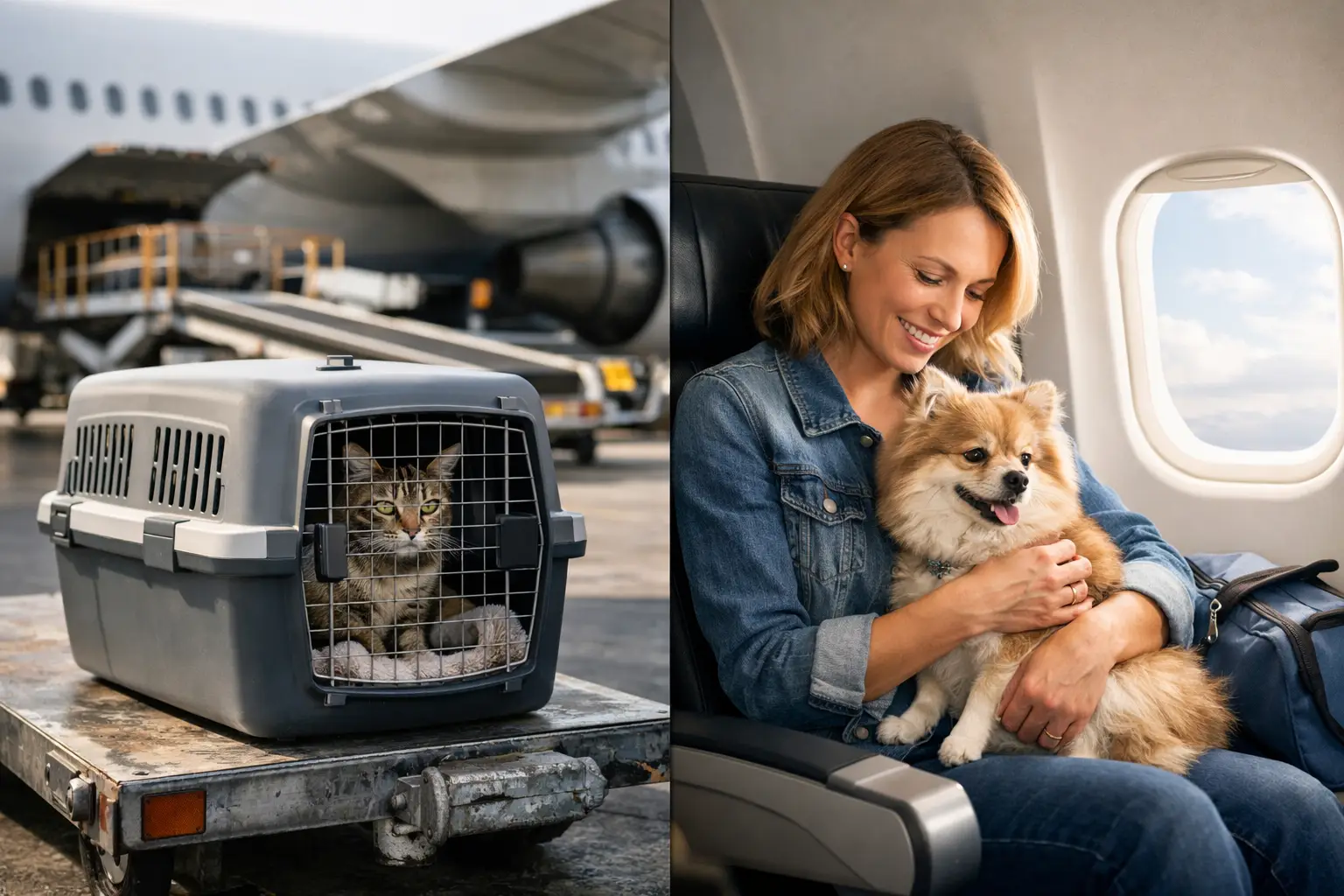
A pet’s flight plan can shape the entire relocation experience. When families compare pet cargo versus accompanied travel, the question is rarely just whether a pet can fly with them. It is whether the route, airline procedures, entry rules, crate setup, and arrival process will support a safe, compliant move without avoidable stress.

Both options can be appropriate for international travel. The better choice depends on your pet, your itinerary, the airlines serving your route, and the regulations at both ends of the journey. What works for a small dog flying with an owner to one destination may be impossible or unsuitable for a large dog, a multi-country move, or a relocation involving strict import controls.

What accompanied pet travel means

Accompanied travel means your pet travels under the same overall reservation or journey as you. Depending on the airline, pet size, destination, and available service, this may mean traveling in the cabin or as checked baggage in a climate-controlled section of the aircraft.

Cabin travel is generally limited to small pets that can remain comfortably inside an airline-approved carrier placed under the seat in front of you. While this arrangement can feel reassuring for owners, cabin access is not universal. Many international airlines, routes, and destination countries restrict or do not allow pets in the cabin.

Checked-baggage travel is different. Your pet travels in an approved travel crate in the aircraft hold while you are on the same flight. Although owners often describe this as “flying underneath,” the process is managed through specific airline procedures, with controlled handoff at check-in and collection after arrival. Not every airline offers this option, particularly on international routes.

Accompanied travel can be a good fit when your pet qualifies for the airline’s service, the itinerary is direct or simple, and the destination permits that method of entry. It may also make sense when an owner wants to complete the airport check-in process personally and travel on the same day as their pet.

Pet cargo versus accompanied travel: the key difference

Pet cargo, often called manifest cargo, is a dedicated airline cargo service. Your pet travels in an IATA-compliant crate and is booked through the airline’s cargo operation rather than as part of your passenger booking. The pet may fly on the same aircraft as the owner, on a different flight, or even before or after the owner’s own travel date.

This does not mean a pet is treated as ordinary luggage. Cargo transport has its own acceptance standards, trained handling procedures, facility processes, flight planning requirements, and documentation checks. For many international relocations, particularly for medium and large dogs, cargo is the only airline-approved option.

The most practical distinction is flexibility. Accompanied travel is tied closely to the owner’s passenger itinerary and the airline’s pet allowance for that flight. Cargo can offer more routing possibilities, more appropriate options for larger pets, and clearer handling procedures for complex international moves. It can also be necessary when the owner cannot travel on the same date, when a destination requires cargo entry, or when the pet is being relocated with a professional transport plan.

Neither option is automatically safer simply because of the label. Safety comes from choosing a suitable route, meeting airline and government requirements, using the correct crate, avoiding risky weather conditions, and ensuring every handoff is planned carefully.

When accompanied travel may be the right choice

Accompanied travel is often attractive because owners and pets leave together and arrive together. For a healthy small pet that is eligible for cabin travel, a direct flight may provide a straightforward solution. A familiar owner nearby can also be comforting before boarding and after landing.

However, emotional preference should not override operational reality. An owner may be on a passenger itinerary with tight connections, a late-night terminal transfer, or an airline that accepts pets only on certain flights. A route that looks convenient for a person can be difficult for a pet.

Accompanied travel also requires owners to handle several time-sensitive steps at the airport. These may include airline check-in, veterinary certificate review, crate inspection, payment procedures where applicable, export documentation, and discussions with airline staff. At arrival, the pet may still need customs clearance, agricultural inspection, or an import review before the family can leave the airport.

For relocations between the United States and Central America, procedures can vary significantly by country, airline, pet species, and point of entry. A pet that meets an airline’s requirements may still need separate government documentation to enter the destination legally.

When pet cargo is the stronger option

Cargo is commonly the better choice for large dogs, breeds that cannot fit within cabin limits, pets traveling independently of their owners, and moves involving more complicated routes. It may also provide a more workable path when passenger airlines have limited pet policies or when a country requires pets to arrive through a cargo terminal.

The cargo process generally begins well before travel day. The crate must meet airline specifications, the pet’s veterinary records must align with destination requirements, and flight space must be confirmed. Some moves also require export clearances, import permits, endorsements, laboratory testing, or advance approvals.

At departure, cargo acceptance typically occurs at a dedicated facility rather than the regular passenger check-in counter. This allows airline teams to review the pet, crate, and documents under cargo procedures. Upon arrival, collection may take place at a cargo terminal, followed by customs or animal health clearance.

This extra structure can be especially valuable for high-stakes moves. Rather than forcing a pet into a passenger itinerary that was designed around human convenience, cargo planning can prioritize appropriate flight timing, connection windows, ground handling, and destination clearance.

Factors that should guide the decision

Your pet’s welfare should come first, but welfare is influenced by practical details. Age, health status, temperament, size, breed, crate comfort, and prior travel experience all matter. A veterinarian can help assess whether air travel is appropriate, while a qualified relocation specialist can determine which transport method is viable for the planned route.

Airline policies are equally important. Airlines may set restrictions based on aircraft type, seasonal temperatures, route length, breed, embargoes, and the airports involved. A service available on one route may not be offered on the next flight or during a particular month.

Destination rules can be decisive. Import regulations may require a microchip, current rabies vaccination, government-endorsed health certificate, parasite treatments, rabies antibody testing, or permits. Dogs entering the United States may also be subject to CDC requirements that vary based on travel history and country classification. Documentation must be accurate, complete, and issued within the required timeframes.

Finally, consider arrival logistics. If your flight lands after office hours, if your destination airport has limited inspection services, or if you will be traveling onward immediately, an otherwise acceptable transport option can become difficult. The plan should account for who will receive the pet, where clearance occurs, and what happens if a flight is delayed.

Planning for a calmer travel day

Whether a pet travels as cargo or accompanied, preparation begins weeks or months ahead. Crate training deserves particular attention. The travel crate should be a familiar, positive space well before departure, not something introduced the night before a flight.

Avoid assuming that sedatives are the answer to travel anxiety. Many airlines discourage or restrict sedation because it can affect a pet’s balance, breathing, and ability to regulate body temperature. Any medication decision should be discussed directly with your veterinarian and aligned with airline policy.

Travel-day planning should also include a measured meal schedule, exercise before departure, identification on the crate, absorbent bedding when appropriate, and clear emergency contact information. For cargo movements, reliable coordination between the owner, transport team, airline, and receiving party is essential.

Choose the option that serves the journey, not just the itinerary

The best choice is not always the option that keeps your pet physically closest to you during the flight. Sometimes accompanied travel is the simplest, most suitable path. In other cases, cargo provides the safer and more compliant structure for a pet’s size, route, or destination requirements.

A carefully planned relocation gives every part of the journey the attention it deserves, from veterinary preparation and airline acceptance to customs clearance and the moment your pet is safely home. When the route is complex, experienced coordination can turn a stressful unknown into a clear plan built around your pet’s comfort and your family’s reunion.

Pet Cargo Versus Accompanied Travel Explained

September 8th, 2026 | Uncategorized

A pet’s flight plan can shape the entire relocation experience. When families compare pet cargo versus accompanied travel, the question is rarely just whether a pet can fly with them. It is whether the route, airline procedures, entry rules, crate setup, and arrival process will support a safe, compliant move without avoidable stress.

Both options can be appropriate for international travel. The better choice depends on your pet, your itinerary, the airlines serving your route, and the regulations at both ends of the journey. What works for a small dog flying with an owner to one destination may be impossible or unsuitable for a large dog, a multi-country move, or a relocation involving strict import controls.

What accompanied pet travel means

Accompanied travel means your pet travels under the same overall reservation or journey as you. Depending on the airline, pet size, destination, and available service, this may mean traveling in the cabin or as checked baggage in a climate-controlled section of the aircraft.

Cabin travel is generally limited to small pets that can remain comfortably inside an airline-approved carrier placed under the seat in front of you. While this arrangement can feel reassuring for owners, cabin access is not universal. Many international airlines, routes, and destination countries restrict or do not allow pets in the cabin.

Checked-baggage travel is different. Your pet travels in an approved travel crate in the aircraft hold while you are on the same flight. Although owners often describe this as “flying underneath,” the process is managed through specific airline procedures, with controlled handoff at check-in and collection after arrival. Not every airline offers this option, particularly on international routes.

Accompanied travel can be a good fit when your pet qualifies for the airline’s service, the itinerary is direct or simple, and the destination permits that method of entry. It may also make sense when an owner wants to complete the airport check-in process personally and travel on the same day as their pet.

Pet cargo versus accompanied travel: the key difference

Pet cargo, often called manifest cargo, is a dedicated airline cargo service. Your pet travels in an IATA-compliant crate and is booked through the airline’s cargo operation rather than as part of your passenger booking. The pet may fly on the same aircraft as the owner, on a different flight, or even before or after the owner’s own travel date.

This does not mean a pet is treated as ordinary luggage. Cargo transport has its own acceptance standards, trained handling procedures, facility processes, flight planning requirements, and documentation checks. For many international relocations, particularly for medium and large dogs, cargo is the only airline-approved option.

The most practical distinction is flexibility. Accompanied travel is tied closely to the owner’s passenger itinerary and the airline’s pet allowance for that flight. Cargo can offer more routing possibilities, more appropriate options for larger pets, and clearer handling procedures for complex international moves. It can also be necessary when the owner cannot travel on the same date, when a destination requires cargo entry, or when the pet is being relocated with a professional transport plan.

Neither option is automatically safer simply because of the label. Safety comes from choosing a suitable route, meeting airline and government requirements, using the correct crate, avoiding risky weather conditions, and ensuring every handoff is planned carefully.

When accompanied travel may be the right choice

Accompanied travel is often attractive because owners and pets leave together and arrive together. For a healthy small pet that is eligible for cabin travel, a direct flight may provide a straightforward solution. A familiar owner nearby can also be comforting before boarding and after landing.

However, emotional preference should not override operational reality. An owner may be on a passenger itinerary with tight connections, a late-night terminal transfer, or an airline that accepts pets only on certain flights. A route that looks convenient for a person can be difficult for a pet.

Accompanied travel also requires owners to handle several time-sensitive steps at the airport. These may include airline check-in, veterinary certificate review, crate inspection, payment procedures where applicable, export documentation, and discussions with airline staff. At arrival, the pet may still need customs clearance, agricultural inspection, or an import review before the family can leave the airport.

For relocations between the United States and Central America, procedures can vary significantly by country, airline, pet species, and point of entry. A pet that meets an airline’s requirements may still need separate government documentation to enter the destination legally.

When pet cargo is the stronger option

Cargo is commonly the better choice for large dogs, breeds that cannot fit within cabin limits, pets traveling independently of their owners, and moves involving more complicated routes. It may also provide a more workable path when passenger airlines have limited pet policies or when a country requires pets to arrive through a cargo terminal.

The cargo process generally begins well before travel day. The crate must meet airline specifications, the pet’s veterinary records must align with destination requirements, and flight space must be confirmed. Some moves also require export clearances, import permits, endorsements, laboratory testing, or advance approvals.

At departure, cargo acceptance typically occurs at a dedicated facility rather than the regular passenger check-in counter. This allows airline teams to review the pet, crate, and documents under cargo procedures. Upon arrival, collection may take place at a cargo terminal, followed by customs or animal health clearance.

This extra structure can be especially valuable for high-stakes moves. Rather than forcing a pet into a passenger itinerary that was designed around human convenience, cargo planning can prioritize appropriate flight timing, connection windows, ground handling, and destination clearance.

Factors that should guide the decision

Your pet’s welfare should come first, but welfare is influenced by practical details. Age, health status, temperament, size, breed, crate comfort, and prior travel experience all matter. A veterinarian can help assess whether air travel is appropriate, while a qualified relocation specialist can determine which transport method is viable for the planned route.

Airline policies are equally important. Airlines may set restrictions based on aircraft type, seasonal temperatures, route length, breed, embargoes, and the airports involved. A service available on one route may not be offered on the next flight or during a particular month.

Destination rules can be decisive. Import regulations may require a microchip, current rabies vaccination, government-endorsed health certificate, parasite treatments, rabies antibody testing, or permits. Dogs entering the United States may also be subject to CDC requirements that vary based on travel history and country classification. Documentation must be accurate, complete, and issued within the required timeframes.

Finally, consider arrival logistics. If your flight lands after office hours, if your destination airport has limited inspection services, or if you will be traveling onward immediately, an otherwise acceptable transport option can become difficult. The plan should account for who will receive the pet, where clearance occurs, and what happens if a flight is delayed.

Planning for a calmer travel day

Whether a pet travels as cargo or accompanied, preparation begins weeks or months ahead. Crate training deserves particular attention. The travel crate should be a familiar, positive space well before departure, not something introduced the night before a flight.

Avoid assuming that sedatives are the answer to travel anxiety. Many airlines discourage or restrict sedation because it can affect a pet’s balance, breathing, and ability to regulate body temperature. Any medication decision should be discussed directly with your veterinarian and aligned with airline policy.

Travel-day planning should also include a measured meal schedule, exercise before departure, identification on the crate, absorbent bedding when appropriate, and clear emergency contact information. For cargo movements, reliable coordination between the owner, transport team, airline, and receiving party is essential.

Choose the option that serves the journey, not just the itinerary

The best choice is not always the option that keeps your pet physically closest to you during the flight. Sometimes accompanied travel is the simplest, most suitable path. In other cases, cargo provides the safer and more compliant structure for a pet’s size, route, or destination requirements.

A carefully planned relocation gives every part of the journey the attention it deserves, from veterinary preparation and airline acceptance to customs clearance and the moment your pet is safely home. When the route is complex, experienced coordination can turn a stressful unknown into a clear plan built around your pet’s comfort and your family’s reunion.

Translate »