

Arrival Veterinary Inspection: What Pets Face
September 12th, 2026 | Uncategorized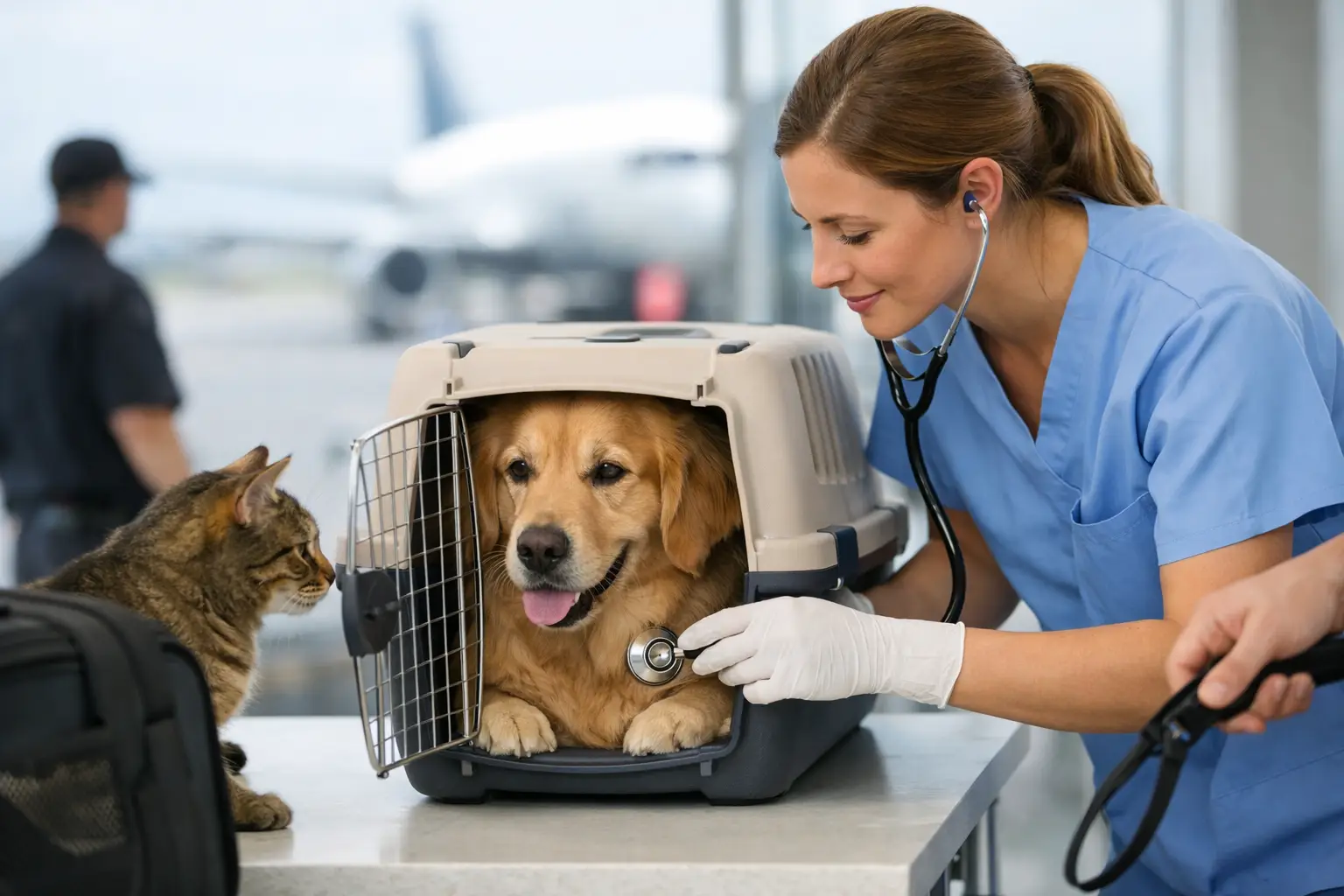
The moment your pet lands, the journey is not always over. An arrival veterinary inspection may be the final checkpoint before you can reunite and continue home. For families relocating internationally, this inspection is where carefully prepared health records, import permits, identification, and airline arrangements are reviewed against the destination’s entry rules.
Most pets clear without difficulty when their paperwork and travel plan are correct. But a missing signature, an expired treatment, or a document that does not match the pet’s microchip information can create stressful delays. Knowing what happens at arrival helps you prepare calmly and protect your pet from avoidable complications.
What Is an Arrival Veterinary Inspection?
An arrival veterinary inspection is an official review of a pet after landing in a new country. Depending on the destination, it may be carried out by a government veterinarian, animal health officer, customs official, or a coordinated team at the airport or border crossing.
The inspection serves two purposes. Officials need to confirm that the animal meets the country’s import requirements and that there are no visible signs of illness that could present an animal or public health concern. The process can be brief, but it is not a formality. Authorities have the power to hold a pet for further review, require additional treatment or testing, deny entry, or order quarantine when requirements are not met.
Procedures vary considerably by country, species, travel route, and the pet’s country of origin. A dog traveling to the United States may face different requirements than one entering Costa Rica, Guatemala, Colombia, or another destination in Central America. Rules also change, particularly when disease-control measures are updated. The plan must always be built around the current requirements for the specific trip.
What Officials Usually Review at Arrival
At the inspection point, officials generally compare the pet in front of them with the documents presented. They may scan the microchip, review the original veterinary health certificate, confirm vaccine records, and check permits or prior approvals. They may also inspect the travel crate and observe the pet’s overall condition.
A typical review focuses on whether the information is consistent across every record. Your pet’s name, species, breed, sex, age or date of birth, microchip number, vaccine dates, and owner details should align exactly. Small differences that seem harmless, such as a missing middle name or an incorrect microchip digit, can require clarification at the worst possible time.
Officials may also look for signs of illness or distress, including unusual discharge, coughing, weakness, skin lesions, or diarrhea. A pet who is tired after a long flight is not necessarily considered unwell, but visible symptoms can lead to closer evaluation. This is one reason welfare-focused route planning matters. Reducing excessive layovers, avoiding unsuitable weather conditions, and choosing airline arrangements appropriate for your pet can support a safer arrival.
Documentation is often the deciding factor
The health certificate is usually central to the inspection, but it is rarely the only document that matters. Depending on the destination, your file may need to include an import permit, proof of rabies vaccination, parasite-treatment records, a rabies antibody titer result, airline paperwork, or evidence of compliance with destination-specific dog import rules.
Timing is just as critical as having the right paperwork. Many certificates must be issued within a narrow window before departure. Vaccinations may need to be completed a certain number of days before travel, while some tests require a much longer lead time. A document can be genuine and medically valid yet still fail to meet an import deadline.
Original documents are often required. Keep them protected, organized, and immediately available to the person collecting the pet or handling clearance. Digital copies are valuable backups, but they may not replace an original signed and endorsed certificate.
How to Prepare Your Pet for Veterinary Inspection
Preparation begins well before the flight is booked. International pet travel is a sequence of connected requirements, not a last-minute airport task. Start by confirming the destination rules, the country of departure, any transit-country requirements, and the applicable airline standards.
Your preparation should include four practical areas:
- Confirming that the microchip is readable and recorded consistently on all veterinary and travel documents.
- Scheduling vaccinations, treatments, examinations, and laboratory work early enough to meet required waiting periods.
- Obtaining the correct health certificate and any government endorsement within the destination’s permitted timeframe.
- Preparing a complete arrival file with originals, copies, permits, contact information, and clear instructions for whoever will meet the pet.
It also helps to prepare your pet for the experience itself. Use an airline-compliant crate that allows your pet to stand, turn, and rest naturally. Let your pet spend calm, positive time in the crate before departure rather than introducing it on travel day. Follow your veterinarian’s feeding and hydration guidance, and do not use sedatives unless a qualified veterinarian specifically recommends them and the airline permits their use.
For pets with chronic conditions, brachycephalic breeds, senior pets, very young animals, or pets traveling during extreme weather, the travel plan may need additional attention. Direct flights are not always available, and the shortest itinerary is not automatically the best option. The right route depends on airline procedures, connection times, temperature restrictions, airport handling capabilities, and your pet’s individual needs.
What Can Cause Delays at the Airport?
The most common problems are preventable. Paperwork issued too early or too late, a missing official endorsement, incomplete parasite treatment details, or records that do not match the microchip can interrupt clearance. So can confusion over whether an import permit was required before travel.
Delays can also occur when flight changes affect document validity. If an itinerary is moved by a day, a health certificate that was valid at departure may fall outside the permitted entry window. Airline disruptions are frustrating for every traveler, but for pets they can have regulatory consequences as well. This is why proactive monitoring and contingency planning are valuable.
A pet may be referred for a more detailed examination if officials have welfare or health concerns. In that situation, remain cooperative and provide documents promptly. The outcome depends on local regulations and the circumstances observed. Attempting to argue at the inspection counter rarely helps; clear records and informed local handling do.
Customs Clearance and Veterinary Clearance Are Different
Pet owners often use the terms interchangeably, but customs and veterinary clearance are not always the same process. Veterinary authorities assess animal-health compliance. Customs authorities may review declarations, ownership information, and other entry formalities. At some airports, these steps happen at one counter. At others, they occur in a specific order and may involve separate offices.
This distinction matters when arranging collection. Your pet may be released from the airline’s care only after both processes are complete. A family member arriving at the airport with incomplete documents or no authorization to act on your behalf can unintentionally add time to an already demanding day.
For complex moves, professional arrival coordination can make a meaningful difference. Planet Pet Relocation coordinates documentation, airline communication, customs procedures, and destination arrangements so families are not left trying to interpret requirements while their pet is waiting for release. This is particularly helpful when moving through unfamiliar airports or managing requirements across Central America and international routes.
If Your Pet Is Held for Further Review
A hold does not automatically mean your pet will be denied entry. Sometimes officials simply need to verify a record, contact the issuing veterinarian, scan a difficult-to-read microchip, or complete an additional examination. The length and outcome of the hold depend on the issue and the destination’s rules.
The best response is to have reliable local support, accessible originals, and a clear point of contact who can respond quickly. Keep your phone available after landing, even if you are traveling separately from your pet. If an authority requests clarification, a fast, accurate response can prevent a minor question from becoming a prolonged delay.
Your pet has already completed the hardest part: the flight. A well-managed arrival veterinary inspection gives officials the confidence to release them safely into your care. Careful planning before departure creates the calmest possible final step, so your reunion can begin with the attention your pet deserves.

