

How to Choose Airline Crates for Pet Travel
October 12th, 2026 | Uncategorized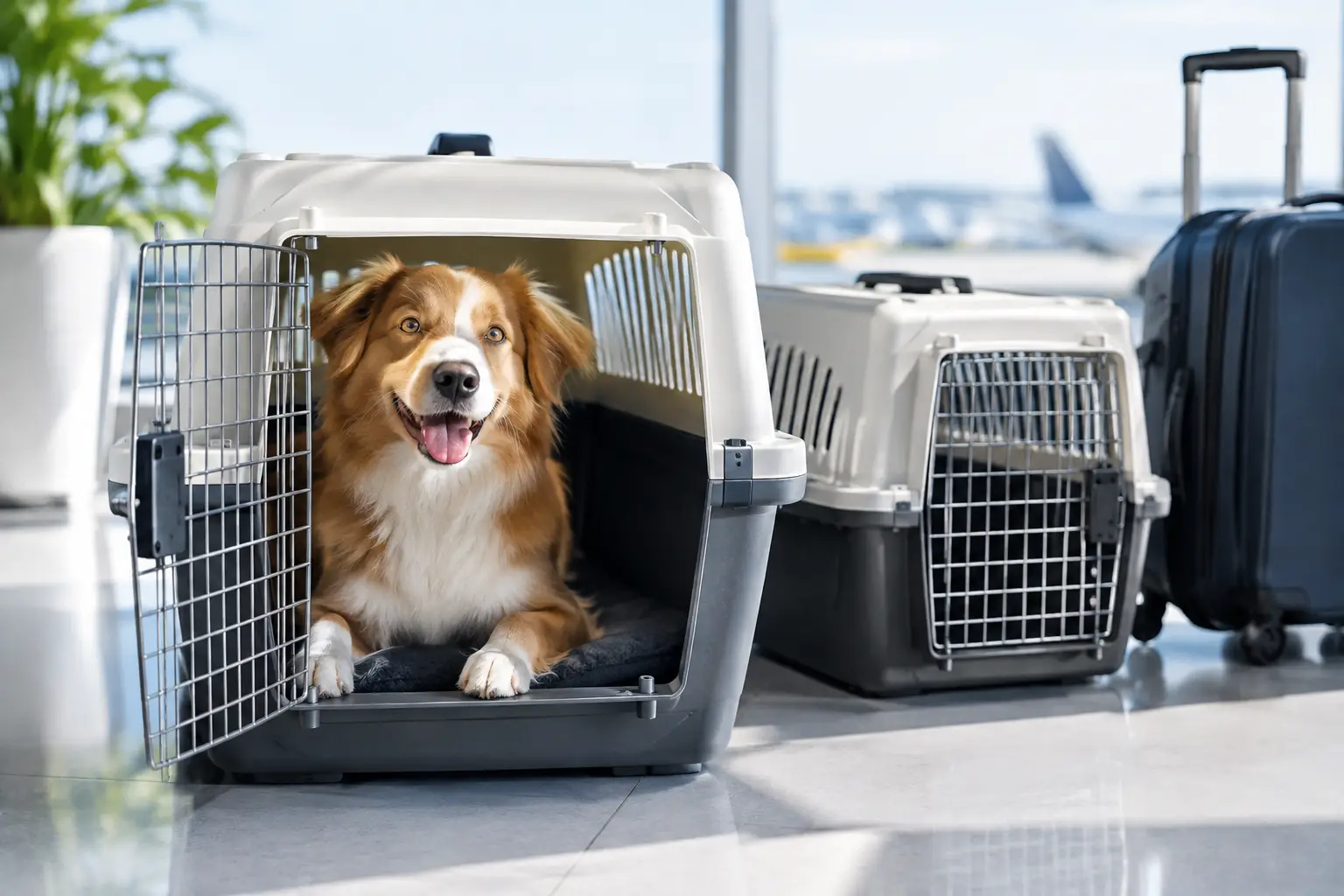
A crate can look spacious in your home and still be unsuitable for an international flight. When learning how to choose airline crates, the goal is not simply to buy the largest kennel available. Your pet needs enough room to stand naturally, turn around, and rest comfortably, while the crate must also meet the specific airline’s construction, size, and handling requirements.
For families planning an international move, the crate is a critical part of the travel plan. It affects airline acceptance, your pet’s comfort during handling and flight, and the likelihood of a smooth departure. Choosing early gives your pet time to become familiar with the space and gives your relocation team time to confirm that the crate works for the selected route.
Start With Your Airline’s Current Requirements
Airlines do not all apply the same pet travel policies. Most follow internationally recognized live-animal transport standards, but individual carriers may set stricter rules for crate dimensions, ventilation, door construction, water containers, seasonal restrictions, or breeds. A crate that was accepted on a previous trip, or approved by another airline, is not automatically approved for your current journey.
Before purchasing a crate, confirm which airline will operate every flight segment. This matters most on itineraries with connections, code-share flights, or changes between airlines. The operating carrier’s rules generally control what will be accepted at check-in.
Hard-sided plastic kennels are commonly used for pets traveling in the cargo hold, but suitability depends on more than the material. Airlines may require a solid one-piece top and bottom, secure metal hardware, a sturdy door, and ventilation openings on multiple sides. Some crates marketed as “airline approved” are intended only for cabin travel or do not meet the requirements for an international cargo journey.
A professional pet relocation coordinator can verify crate requirements against the actual routing before travel day. That extra review can prevent the distressing possibility of being turned away at the airport because of a detail that seemed minor at home.
How to Choose Airline Crates That Fit Properly
Correct sizing is the foundation of safe crate selection. Your pet should be able to stand without crouching, sit upright without the ears touching the roof, turn around normally, and lie down in a natural position. The crate should not be so large that your pet slides or loses balance during normal movement, handling, or turbulence.
Measure your pet while standing, not while curled up or resting. Length is measured from the tip of the nose to the base of the tail, with additional space considered for the front legs. Height is measured from the floor to the top of the head or ear tips, whichever is higher. Width should allow your pet to turn comfortably, and the kennel needs adequate interior height once a travel pad is in place.
Breed and body shape matter. A long-bodied dog, a tall dog with upright ears, or a broad-chested breed may need a crate that differs from what a standard weight-based chart suggests. For pets with short noses, airline acceptance and routing can require added care because certain airlines limit or restrict travel for brachycephalic breeds, particularly during warm weather.
Cats also need a properly sized crate. Although they may appear content in a smaller space, they still need room to stand, turn, and lie down comfortably. A secure crate with appropriate ventilation is especially important for cats, which may try to retreat or push against openings when they feel uncertain.
Look Beyond the Label on the Box
The phrase “airline approved” is useful only as a starting point. Read the crate’s specifications and inspect its construction. For international travel, details matter: the door must latch securely, the ventilation openings must meet the carrier’s expectations, and the shell should not flex or separate under normal handling.
Pay attention to how the crate is assembled. Many airlines require metal nuts and bolts rather than plastic clips alone. The door should be metal and securely fastened, with a mechanism that cannot be opened accidentally by a pet from inside the kennel. Wheels, if included, often need to be removed or disabled so the crate cannot roll during transport.
The crate must also be clean, dry, and free of cracks, broken vents, sharp edges, or damaged fasteners. Do not assume an older crate is safe simply because it has been used before. A worn door, loose bolt, or split plastic panel can create an airline acceptance issue and, more importantly, a welfare concern.
Prepare the Crate for a Long Travel Day
Once the right crate has been selected, set it up for practical comfort without adding items that could become unsafe or noncompliant. The floor should have absorbent bedding or a pad that stays reasonably dry. Avoid thick, loose bedding that can bunch up, trap moisture, or interfere with your pet’s footing.
Airlines typically require accessible water containers attached to the inside of the crate door. These should be stable, easy for airport staff to refill from the outside when required, and positioned where your pet can reach them. Food instructions, identification labels, and travel documents may also need to be attached to the exterior in the format requested by the airline or destination authorities.
Do not place loose toys, collars, leashes, or items with straps inside the crate unless your transport plan specifically permits them. A familiar scent can be reassuring, but safety takes priority. Your pet should travel with a properly fitted collar only when required by the airline’s procedures, and leashes are usually secured outside the crate rather than left inside where they could snag.
Give Your Pet Time to Build a Positive Association
The best crate is less helpful if your pet encounters it for the first time at check-in. Begin crate familiarization well before travel, ideally weeks in advance. Place the crate in a familiar area with the door open, then encourage calm voluntary visits with meals, treats, and quiet rest periods.
Gradually extend the time your pet spends inside with the door closed. Keep the experience calm and predictable. Never use the crate as punishment, and avoid forcing a frightened pet inside repeatedly. The goal is for the crate to become a known, secure place before the unfamiliar sounds and activity of the airport.
For anxious pets, speak with your veterinarian early. Sedation is generally discouraged for air travel because it can affect balance, breathing, and temperature regulation at altitude. Your veterinarian can advise on your pet’s individual health needs and provide the documentation required for the destination.
Coordinate the Crate With the Entire Relocation Plan
Crate selection should not happen in isolation. Flight availability, aircraft type, weather, airport facilities, pet age, breed, health, and destination import rules can all affect the safest travel arrangement. A crate that fits a direct flight may be difficult to accept on a route requiring a smaller aircraft or a particular connecting airport.
This is particularly relevant when moving between the United States and Central America, where document timing, customs clearance, and airline schedules need to work together. A compliant crate supports the journey, but it is only one piece of a carefully coordinated plan.
Planet Pet Relocation helps families confirm crate suitability as part of a broader welfare-focused travel strategy, including routing, airline coordination, and destination procedures. Clear preparation reduces last-minute decisions and lets you focus on helping your pet feel settled before departure.
Your pet’s crate should feel like a safe, familiar space, not an airport obstacle. Select it early, verify it against the operating airline’s current rules, and give your pet time to adjust. Those simple steps can make travel day calmer for the family member who depends on you most.

