

How to Prepare a Dog Travel Crate Safely
November 25th, 2026 | Uncategorized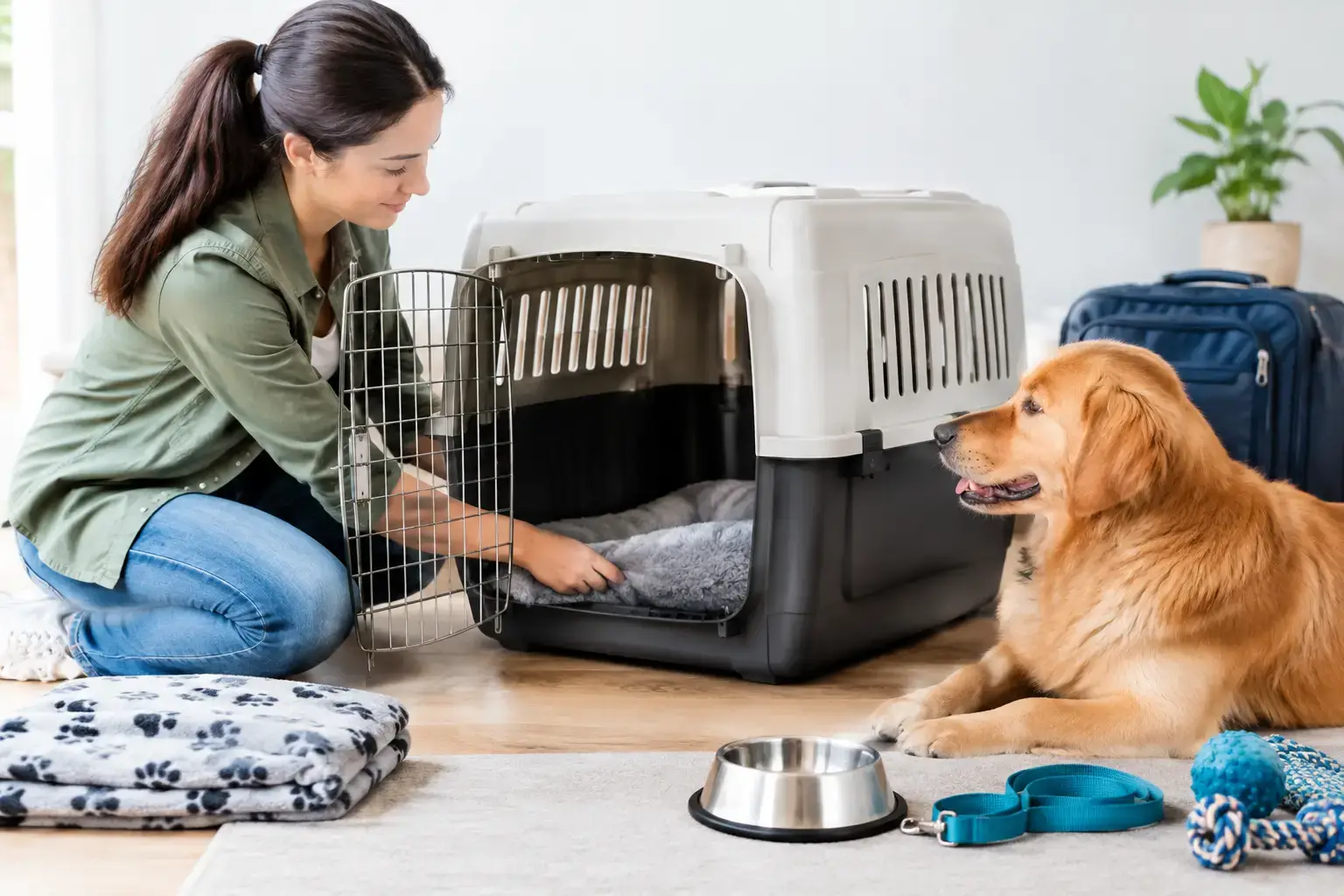
A travel crate is more than a container for your dog during a flight. It is their personal space through check-in, security handling, loading, transit, and arrival. Learning how to prepare a dog travel crate is not a last-minute packing job. Done well, it supports your pet’s comfort, meets airline requirements, and reduces the chance of delays on an already demanding travel day.
For international moves, the crate must work for both your dog and the journey. Airline rules, aircraft type, weather conditions, connection times, and destination procedures can all affect what is acceptable. The best approach is to begin early, give your dog time to become comfortable inside the crate, and confirm every detail against the requirements for your specific itinerary.
How to Prepare a Dog Travel Crate for Flying
Start with the crate itself. For air travel, dogs generally need a rigid, airline-approved kennel with secure fasteners, adequate ventilation, and a solid, leak-proof floor. Soft-sided carriers may be appropriate for a small pet traveling in the cabin, but they are not a substitute for an approved travel kennel when a dog must travel in the aircraft hold.
The correct size matters just as much as the correct style. Your dog should be able to stand without their ears touching the roof, turn around naturally, and lie down in a comfortable position. A crate that is too small can compromise comfort and may be refused at check-in. One that is excessively large is not necessarily better either, since it can allow a dog to slide or lose balance during handling and movement.
Measure your dog while they are standing in a natural posture, not stretched out or crouched. Airlines may use their own sizing calculations, so do not rely on a crate label alone. Confirm the measurements and kennel specifications before purchasing or preparing the crate, particularly for large breeds, snub-nosed breeds, or trips involving more than one airline.
Choose an airline-compliant design
Most international airlines follow standards based on International Air Transport Association guidance, but each carrier can apply additional restrictions. The crate should have ventilation openings on multiple sides, a secure metal-bar door, and fasteners that cannot easily come apart. Some airlines require metal bolts and nuts rather than plastic clips, even if the crate is marketed as airline approved.
Avoid wheels unless they can be removed or locked as required by the airline. Check that the door latch closes firmly and cannot be pushed open from inside. If cable ties are permitted, they may be used as an extra security measure at the door, but they should never prevent authorized personnel from opening the crate if necessary.
For puppies traveling together, or bonded adult dogs, do not assume they can share a kennel. Airline policies, animal size, temperament, and destination rules determine whether this is allowed. Separate crates are often the safer and more compliant choice.
Help Your Dog See the Crate as a Safe Place
A compliant crate is only half the preparation. A dog that has never spent time in a kennel may experience travel as far more stressful than a dog that already recognizes it as a familiar resting place.
Bring the crate home weeks before departure whenever possible. Set it up in a quiet area where your dog normally relaxes. Leave the door open and place familiar bedding, a favorite toy if permitted, or occasional treats inside. Let your dog enter by choice. Forcing them into the crate can create a negative association that is difficult to reverse before travel.
Gradually build from short, relaxed periods in the open crate to closing the door for a few minutes while you remain nearby. Increase duration slowly and reward calm behavior. Once your dog is settled, practice brief periods with the crate door closed while you move around the home. The goal is not to make your dog love confinement. It is to make the crate predictable, safe, and manageable.
It can be tempting to use a new crate only on departure day to keep it clean. That trade-off is rarely worth it. A crate carrying familiar scents and positive experiences is usually much more reassuring than a pristine but unfamiliar kennel.
Be cautious with sedation
Do not sedate your dog for air travel unless your veterinarian specifically recommends it and the airline permits it. Sedatives can affect balance, breathing, and temperature regulation, particularly at altitude. They may also make it harder for your dog to respond normally during transit.
If your dog has anxiety, a veterinarian can discuss appropriate non-sedating strategies, behavior support, or travel-specific guidance. Any medication must be disclosed and handled according to the advice of your veterinarian and the airline.
Set Up the Inside for Comfort and Cleanliness
The interior should be comfortable without becoming crowded. Use a thin, absorbent crate pad, towel, or veterinary bedding that lies flat and does not bunch up. Avoid thick beds, loose blankets, or items with parts your dog could chew or swallow. The right choice depends on your dog’s habits. A reliable chewer needs a simpler setup than a dog who calmly sleeps on a fleece mat.
Line the crate floor with absorbent material beneath the bedding if allowed. This helps manage an accident without leaving your dog standing on a wet surface. Do not place loose food in the crate for the flight unless directed by your pet travel professional or airline. Spilled food can create mess and discomfort, and many pets are less interested in eating while in transit.
Attach water containers securely to the inside of the kennel door, where airline staff can access them without opening the crate. Use bowls designed for travel crates rather than a loose dish on the floor. Depending on the route and airline guidance, water may be provided during travel, while frozen water in the bowl can be useful before departure because it melts gradually.
Keep comfort items simple. A small familiar item may help some dogs, but anything loose, oversized, or difficult to inspect can create a problem at check-in. In international travel, practical and compliant almost always beats elaborate.
Label the Crate Clearly and Completely
Clear identification helps everyone involved in the journey handle your dog appropriately. Use durable labels that will remain readable if exposed to moisture or handling. Your dog’s name should be visible, along with your name, mobile number, email address, departure and arrival information, and any relevant emergency contact details.
Attach the required live-animal and directional labels as specified by the airline. These labels should be visible without blocking ventilation. Keep travel documents in a secure document pouch attached to the top of the crate only when your airline or relocation coordinator instructs you to do so. Originals and copies may need different handling depending on the destination, customs process, and veterinary inspection procedures.
It is also wise to attach feeding and care instructions when required. Keep them brief and factual. Include your dog’s normal food, feeding schedule, any medication information, and your veterinarian’s contact information. Do not write instructions that conflict with airline handling policies or local import requirements.
Prepare for the Final 24 Hours
On travel day, give your dog normal, calm exercise well before leaving for the airport. A relaxed walk and a chance to relieve themselves can make the crate experience easier. Avoid exhausting activity, especially in hot weather, and do not introduce unusual food or treats that could upset their stomach.
Follow your veterinarian’s and travel coordinator’s feeding recommendations. Many dogs do better with a lighter meal several hours before departure, but the right timing depends on their age, health, routine, and flight schedule. Puppies, senior dogs, and pets with medical needs may require a different plan.
Before you leave, check the crate one more time. Confirm that the door locks correctly, bolts are tight, bowls are attached, bedding is dry, labels are accurate, and your dog is wearing identification as advised for the trip. Remove collars, harnesses, or accessories if the airline requires it or if they could catch on the crate door.
For complex international itineraries, professional coordination can make this final stage far less stressful. Planet Pet Relocation helps families align crate preparation with airline rules, documentation, routing, and welfare considerations so small details do not become travel-day setbacks.
Your dog may not understand the destination, the flight, or the paperwork behind the move. They do understand familiar routines and a safe place to rest. Preparing the crate with care gives them one steady, reassuring space while the rest of the journey changes around them.

