

Can Pets Travel on Connecting Flights Safely?
November 19th, 2026 | Uncategorized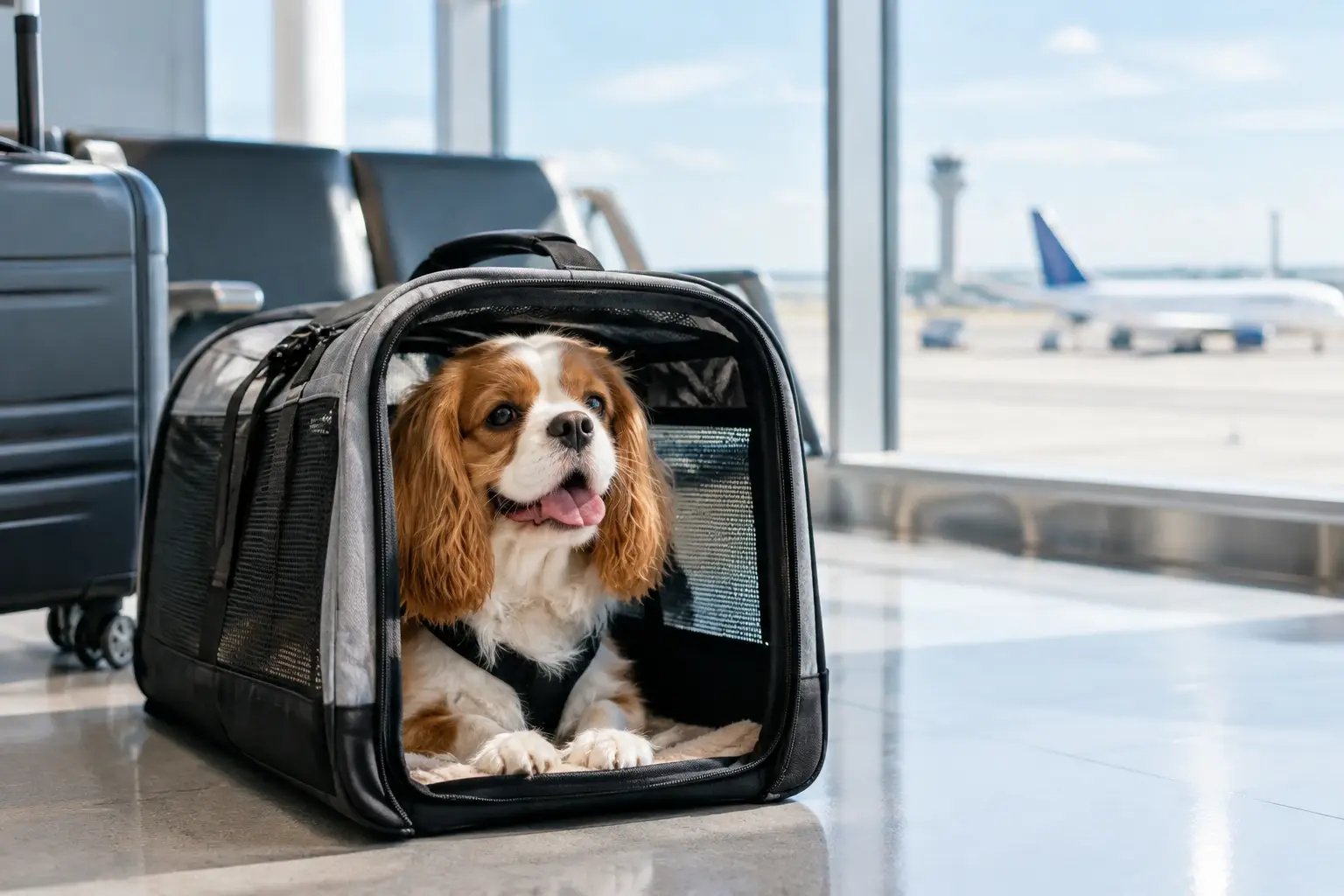
A missed connection is frustrating when you are traveling alone. When your dog or cat is traveling in an airline-approved kennel, it can affect welfare, clearance procedures, and the entire arrival plan. So, can pets travel on connecting flights? Yes, in many cases they can, but only when the route, airline policies, transit requirements, and timing all work together.
For international moves, a connection is not simply a stop between two flights. It is a handoff involving airline ground teams, secure animal facilities, customs rules, and documentation that must remain valid from departure through final arrival. The safest plan is usually the one with the fewest moving parts, but a well-managed connection can be a practical and safe choice when a nonstop route is unavailable.
Can Pets Travel on Connecting Flights Internationally?
Pets may travel on connecting flights either in the cabin, as checked baggage where permitted, or as manifest cargo. The travel method matters because each has different transfer procedures and airline restrictions.
A small pet traveling in the cabin generally stays with its owner during the connection, subject to airport security and the next airline’s cabin-pet rules. This can simplify the transfer, although the pet must remain in its carrier except where an airport specifically permits otherwise. A pet traveling as checked baggage or cargo is transferred by trained ground personnel, not handed to the owner in the terminal during a normal connection.
Not every itinerary that appears bookable for a person is suitable for an animal. Some airlines do not accept pets on certain aircraft, during particular seasons, or on routes involving another carrier. Others require the entire journey to be issued and managed under one approved booking. A routing with two separate tickets can create serious risk because responsibility for the pet may end at the first destination.
What Happens to a Pet During a Connection?
For a properly coordinated journey, airline personnel move the kennel from the arriving aircraft to a designated holding or transfer area. The pet is then prepared for the next flight according to the airport’s handling procedures. This process is designed to keep the animal in controlled areas rather than in public terminals.
The details vary by airport and airline. At a major international hub, pets may be taken to a dedicated animal facility where staff can monitor them, offer water when appropriate, and verify the onward flight. At a smaller airport, the transfer process may be more limited, making route selection especially important.
Owners should not assume they can collect a pet during a layover to walk, feed, or comfort it. In many international transfers, security, customs, and airline protocols prevent this. Opening a kennel in an unfamiliar or unsecured setting can also create an escape risk. The kennel should be prepared before departure with absorbent bedding, a securely attached water container, and clear identification.
The Connection Time Matters More Than Most Travelers Expect
A very short layover may look efficient on paper but leave too little time for safe pet handling. Conversely, an excessively long layover can add unnecessary time in transit. The right connection depends on the airport, airline, travel method, season, and whether the pet must clear customs during transit.
Airlines and cargo handlers often have their own minimum connection requirements for live animals. These can be longer than the minimum time shown for human passengers. A connection that is acceptable for a person racing through a terminal may not provide enough time to unload a kennel, move it through a live-animal facility, complete checks, and load it onto the next aircraft.
Weather is another factor. Heat, cold, storms, and seasonal embargoes can affect whether a pet is accepted on a route or held safely during a delay. A reliable itinerary allows for operational realities rather than relying on the tightest available schedule.
When an Overnight Connection May Be Necessary
Some international routes require an overnight stay because onward animal transport is not available the same day. In that situation, the pet may need formal entry clearance at the transit country, a prearranged animal-care facility, or a kennel arrangement approved by the airline and airport.
Never assume an overnight airport connection is automatic. The transit country may require import permits, health certificates, vaccination records, or advance notification even though it is not the final destination. This is one of the most common areas where a seemingly simple flight plan becomes complicated.
Transit Rules Can Be Different From Final-Destination Rules
A pet can be fully compliant for the destination and still face a problem during transit. Some countries allow sterile airside transit without formal import clearance, while others require animals to clear customs, especially if a change of airline, terminal, airport, or overnight stay is involved.
Documentation must support the full route. Depending on the countries involved, that can include a veterinary health certificate, proof of current rabies vaccination, import permit, microchip records, laboratory testing, export documents, and airline-specific forms. Timing matters as much as having the documents. A certificate issued too early, a vaccination outside the accepted validity period, or a missing endorsement can interrupt travel.
This is particularly relevant for families relocating between the United States, Central America, and other international destinations. Regulations can change, and dog import requirements may be affected by a country’s rabies status or the dog’s recent travel history. Planning should begin well before flight booking, especially when a rabies titer test, import authorization, or government endorsement is required.
Choose the Route, Not Just the Lowest-Friction Flight
The best pet route is rarely chosen by departure time alone. It should be evaluated as a complete welfare and compliance plan. A slightly longer route on a pet-experienced airline with an appropriate connection may be safer than a shorter itinerary involving separate tickets, a tight transfer, or an airport without suitable live-animal handling.
When reviewing options, focus on four practical questions:
- Will one airline or an approved interline arrangement accept responsibility from origin to final destination?
- Is the connection long enough for the airline’s live-animal transfer process?
- Does the transit airport and country permit the planned type of transfer?
- Can the pet meet every document requirement for departure, transit, and arrival?
The animal’s individual needs should also guide the decision. Brachycephalic breeds, senior pets, animals with medical conditions, and highly anxious pets may need additional assessment before travel. A veterinarian can advise on fitness to fly. Sedation is generally not recommended for air travel unless a veterinarian determines it is medically necessary, because it can affect balance, breathing, and temperature regulation at altitude.
Preparing Your Pet for a Multi-Flight Journey
Kennel training is one of the most helpful preparations an owner can make. The travel kennel should feel familiar well before departure, not like a new and frightening place introduced on travel day. Encourage calm time inside with the door open, then gradually build comfort with the door closed for short periods.
Use an airline-compliant kennel sized so the pet can stand naturally, turn around, and lie down comfortably. Attach identification to the exterior and place a copy of key contact and travel details in a protective pouch. Avoid adding loose toys or items that could shift during handling. For longer journeys, an absorbent liner and spill-resistant water setup are more practical than trying to manage food and water during each connection.
On travel day, follow the feeding guidance provided by your veterinarian and transport coordinator. A normal opportunity to relieve itself before check-in is useful, but avoid last-minute changes to diet or routine. Bring your original documents with you, even if copies have been sent ahead.
Why Professional Coordination Helps
Connecting flights create multiple points where one unclear instruction can affect a pet’s journey. Airline pet desks, cargo teams, customs authorities, veterinarians, and destination agents may all work from different timelines. Coordinating those details in advance reduces the chance of discovering a restriction after the pet has already been checked in.
Planet Pet Relocation helps families assess route suitability, prepare documentation, coordinate airline arrangements, and plan arrival handling for complex international moves. The goal is not merely to place a pet on a flight. It is to build a travel plan that protects the pet’s comfort while meeting the rules at every stage.
A connection does not have to stand between your family and a successful relocation. With a realistic schedule, compliant paperwork, and a route designed around your pet’s needs, the journey can remain focused on the moment that matters most: arriving safely together.

