

Rabies FAVN Test for Dogs and Cats Explained
May 25th, 2026 | Uncategorized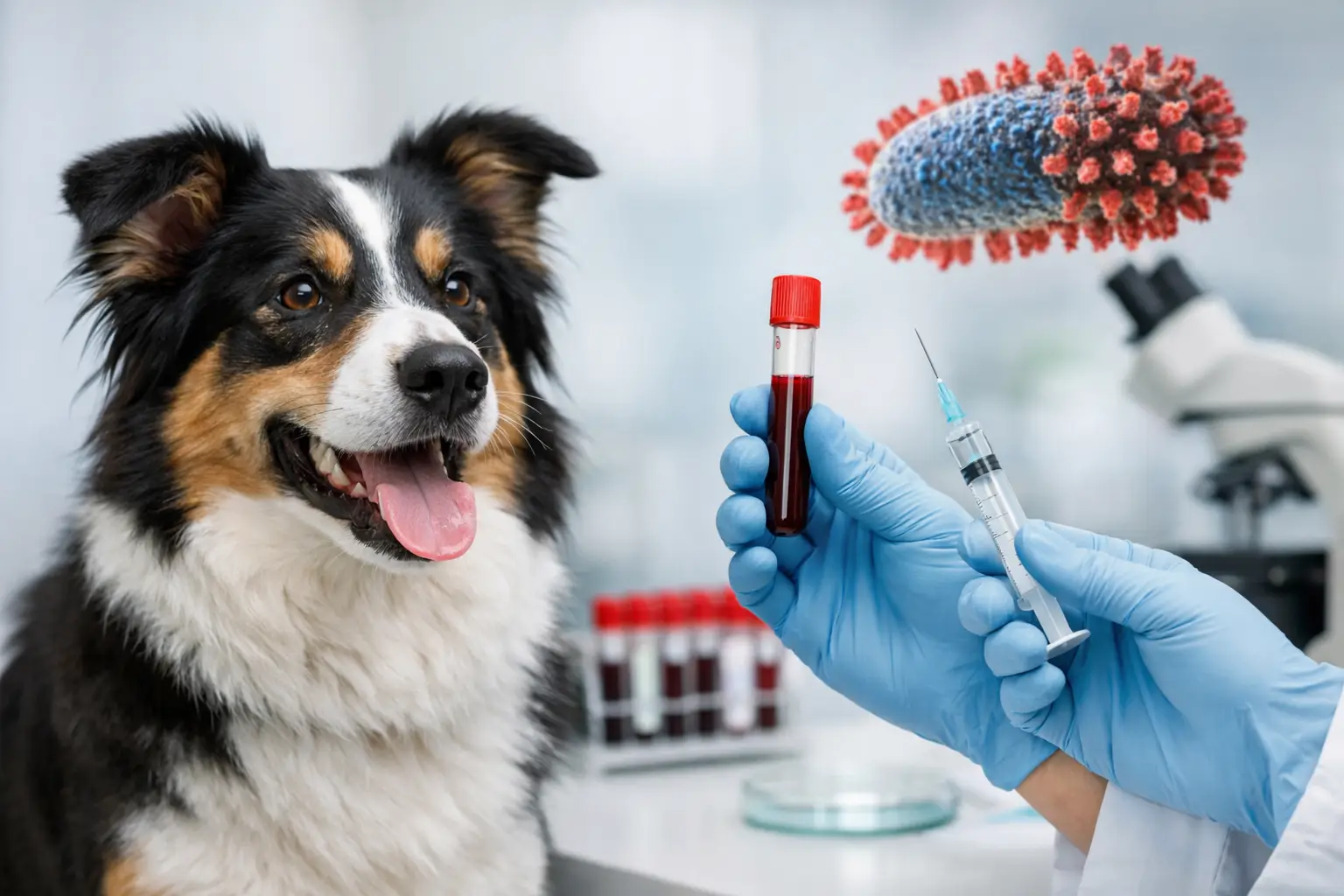
You can have every travel document lined up, every airline kennel requirement checked, and every flight confirmed – and still hit a major delay if the rabies FAVN test for dogs and cats is missing, mistimed, or handled incorrectly. For many international moves, this single lab test can decide whether your dog or cat travels on schedule or gets stuck waiting weeks or even months.
That is why the FAVN test deserves more attention than it usually gets. It is not just another vet appointment. It is a country-specific compliance step tied to import rules, waiting periods, and the pet’s rabies vaccination history. If you are relocating internationally, understanding the role of this test early can save a great deal of stress later.
What is the rabies FAVN test for dogs and cats?
The rabies FAVN test for dogs and cats is a blood titer test that measures whether your pet has developed an adequate level of rabies antibodies after vaccination. FAVN stands for Fluorescent Antibody Virus Neutralization. In practical terms, it helps importing countries confirm that your pet’s rabies vaccine produced the immune response required under their regulations.
This matters because some countries do not rely on vaccination records alone. They want laboratory evidence that the vaccine was effective. A dog or cat may be current on rabies vaccination, but if the destination requires a valid titer result, the vaccine certificate by itself will not be enough.
The test is typically performed after a rabies vaccine has been given and allowed enough time to stimulate immunity. A veterinarian draws a blood sample, and that sample is sent to an approved laboratory for analysis. If the result meets the required threshold, it can support travel eligibility, depending on the destination country’s timeline and paperwork rules.
Planet Pet Relocation provides guidance and coordination for the rabies FAVN titer process as part of international pet relocation planning, including routes involving countries with strict rabies-control regulations.
Rabies FAVN Titer Test for Dogs and Cats
When is a rabies FAVN test required?
It depends entirely on where your pet is coming from and where your pet is going. Some countries require a rabies titer test for entry from certain origins but not others. Some apply the rule broadly to pets arriving from countries they classify as higher rabies risk. Others do not require it at all.
This is where people often get tripped up. They hear that a friend moved a pet internationally without a FAVN test and assume the same will apply to their route. But import rules are not universal, and they can change. A dog or cat traveling from Central America to one destination may need a valid titer and waiting period, while a pet traveling on another route may only need proof of vaccination, a health certificate, and import permits.
Countries such as Belize, Guatemala, El Salvador, and Honduras are considered high-risk for rabies by the US CDC for dog importation purposes. Because of this classification, pets traveling from these countries to destinations with stricter rabies-control policies may require a valid rabies antibody titer test before travel. The same rabies FAVN test is also commonly required for dogs and cats traveling to many other countries worldwide that enforce rabies-control import measures.
Timing is also part of the requirement. In many cases, the blood sample must be drawn after a valid rabies vaccination and before travel by a specific number of days or months. Some countries count the waiting period from the blood draw date, not from the date the lab issues the result. That detail alone can affect the entire travel schedule.
Why timing matters so much
With the rabies FAVN test for dogs and cats, timing errors are often more damaging than missing paperwork. If the blood is drawn too soon after vaccination, the antibody level may be insufficient. If the blood is drawn correctly but too close to the planned travel date, the destination’s waiting period may not be complete in time. If the vaccine was not current when the sample was taken, the result may not be usable.
This is why the process needs to be planned backward from the intended move date. You have to account for the rabies vaccine history, the required interval before the blood draw, lab processing time, any mandatory waiting period after the sample date, and the final health certificate timeline. One weak link can force a reschedule.
For families relocating on a fixed assignment date, visa deadline, school calendar, or housing transfer, those delays are not minor. They can separate a pet from the family’s travel plan and create a much more stressful move.
How the process usually works
Although requirements vary by destination, the basic sequence is fairly consistent. First, your dog or cat must have a valid rabies vaccination that meets the destination’s rules. Then, after the appropriate interval, a veterinarian collects a blood sample for the FAVN test. The sample is sent to an approved lab, where the antibody level is measured.
If the result meets the required standard, the report becomes part of the pet’s travel file. Depending on the destination, that result may need to be accompanied by vaccine records, microchip details, an import permit, an international health certificate, parasite treatments, and endorsement from the relevant authority.
The test result is rarely the only requirement, but it is often the document that controls the timeline. That is why experienced coordination matters. A valid result does not help if the sample was linked to the wrong microchip number, if the vaccine dates do not align, or if the destination requires an original report and the file is incomplete.
Common mistakes that cause travel delays
The most common problem is assuming any rabies titer test is interchangeable with any destination rule. It is not. Some countries specifically require a FAVN test or require testing through recognized laboratories. Another common issue is treating the lab result as the finish line, when it is really just one step in the chain.
Microchip discrepancies are another serious problem. If the microchip was scanned incorrectly, entered inconsistently across records, or implanted after the vaccination when the destination requires the opposite order, the entire file can come under scrutiny. Even small clerical mismatches can become big problems during import review.
Owners also run into trouble by starting too late. International pet travel often looks simple from a distance, especially when a dog or cat is healthy and already vaccinated. But destinations with rabies-control measures do not leave much room for shortcuts. Missing a waiting period by a few days can be enough to prevent entry.
What pet owners should ask before starting
Before scheduling the blood draw, it helps to confirm a few essentials with your veterinarian or relocation coordinator. Is the current rabies vaccine acceptable for the destination? Has enough time passed since vaccination for the sample to be drawn? Does the destination require a specific lab, threshold, or waiting period? Will the pet’s microchip and vaccine records match exactly across every document?
These are not minor technicalities. They are the difference between a smooth clearance process and a last-minute surprise. For international moves, especially on more complex routes, early verification protects both compliance and peace of mind.
The value of guided support
When a move involves multiple agencies, airline rules, veterinary steps, and import controls, the rabies FAVN test for dogs and cats becomes more than a medical requirement. It becomes a scheduling and documentation issue that needs active management. That is especially true for families balancing work relocation, housing transitions, and international travel dates at the same time.
Support can make a real difference here. A coordinated approach helps ensure the vaccine history is reviewed before the blood draw, the sample timing matches the destination rule, and the result is correctly integrated into the rest of the travel paperwork. For many pet owners, that level of oversight reduces the risk of expensive or emotional disruptions.
Planet Pet Relocation regularly assists families moving pets from and through Central America, including Belize, Guatemala, El Salvador, Honduras, Nicaragua, Costa Rica, and Panama, where rabies-related compliance and documentation can play a critical role in travel approval. Learn more about Central America pet export services
The company also offers complete international pet transportation support, including door-to-door services, airline coordination, veterinary scheduling, customs support, and destination guidance for dogs and cats traveling worldwide.
Rabies FAVN test for dogs and cats and travel planning
If your pet may need a FAVN test, the best time to think about it is not a week before the flight. It is at the beginning of the relocation plan, when there is still enough time to sequence each step properly. Even if your destination ultimately does not require it, confirming that early is far better than making assumptions.
International pet relocation works best when medical compliance, paperwork, and transport logistics are treated as one connected process. The FAVN test sits right in the middle of that process. Get it right, and the rest of the move is much easier to manage. Leave it too late, and a simple blood test can become the reason your pet cannot travel with you.
If you are planning a move abroad with your dog or cat, give yourself room for the details. The families who have the smoothest experience are usually not the lucky ones – they are the ones who started early, asked the right questions, and built the timeline around what their pet actually needs.

