

Pet Airline Crate Requirements That Prevent Delays
July 14th, 2026 | Uncategorized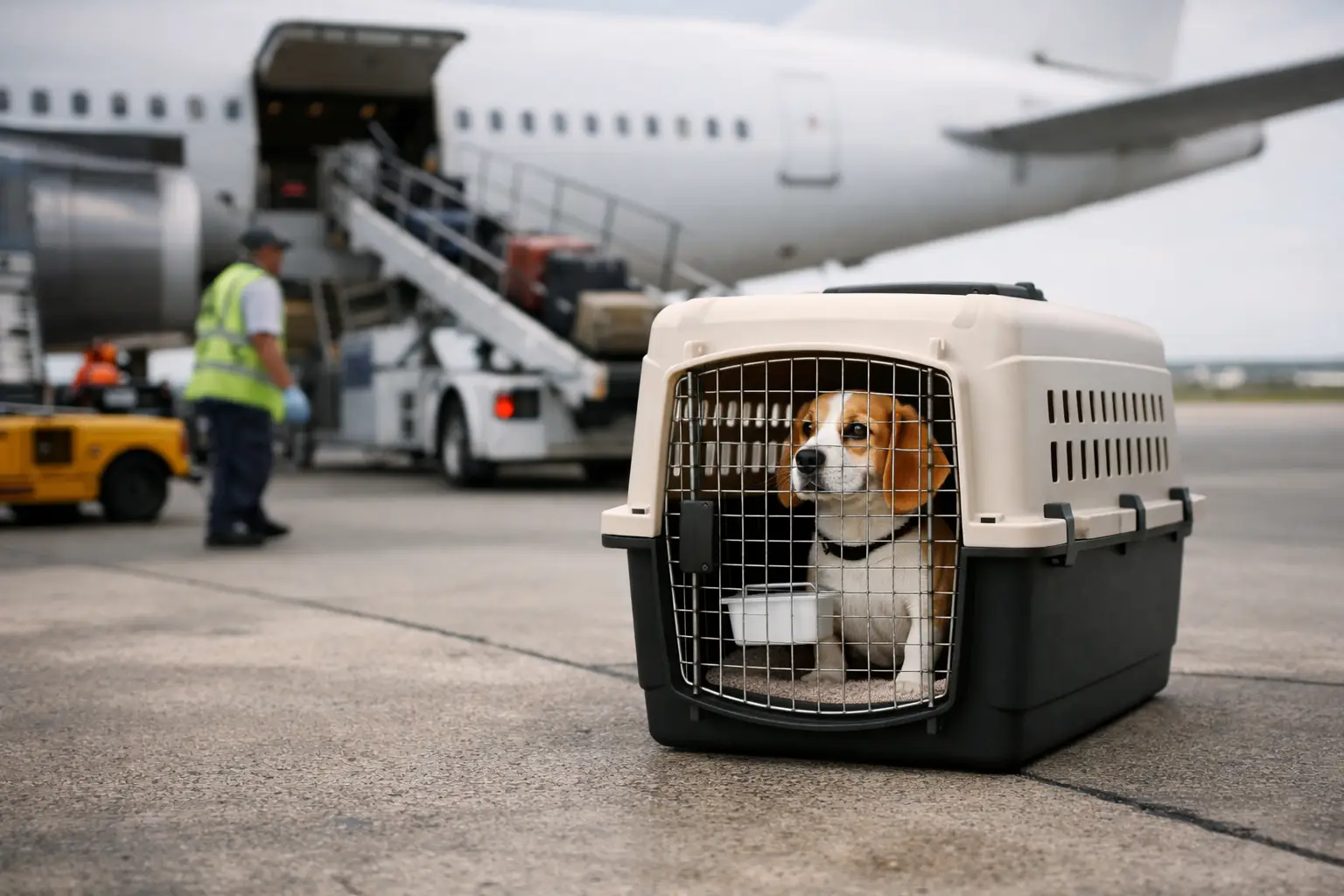
A crate can be the difference between a calm check-in and a heartbreaking refusal at the airport. Pet airline crate requirements are not simply about buying a carrier labeled “airline approved.” The crate must fit your pet, meet the operating airline’s standards, and suit the route, aircraft, weather conditions, and destination rules.
For international moves, the crate is your pet’s protected travel space for a long and unfamiliar day. Choosing it carefully supports comfort, safety, and compliance from departure through arrival.
Pet Airline Crate Requirements Start With the Right Size
The most common crate issue is sizing. A crate that looks roomy enough to an owner may still be rejected if a dog or cat cannot stand naturally, turn around, and lie down in a normal position. Airline staff need to see that your pet has sufficient clearance above its head and enough space to reposition without strain.
For dogs, crate sizing is usually based on four measurements: the distance from the nose to the base of the tail, the height from the floor to the elbow, shoulder width, and height from the floor to the top of the head or ear tips. Airlines commonly use these measurements to determine the minimum internal crate dimensions. A pet traveling with upright ears must have room for those ears without touching the roof.
Do not size up without thought, however. An oversized crate can make a pet less stable during handling and transport. The goal is adequate movement and natural posture, not a large empty enclosure. For two compatible pets traveling together, airlines may have specific rules regarding their combined size, age, species, and total weight. Some airlines require each pet to travel in a separate crate regardless of how well they live together at home.
Cats also need enough room to stand, turn, and rest comfortably. Because cats may curl up quietly, it can be easy to underestimate their required space. Measure rather than guess, especially if your cat is tall, long-bodied, or traveling in a rigid kennel.
Measure Your Pet While Standing Naturally
Take measurements when your pet is standing on a level surface in a relaxed, natural position. Do not compress the coat or encourage a crouch to make the measurements smaller. If your pet is near the limit between two crate sizes, the larger compliant option is generally the safer choice.
A qualified pet relocation professional can confirm dimensions before travel plans are finalized. This is particularly helpful for large breeds, senior pets, puppies, cats with long tails, and dogs with distinctive head or ear shapes.
Construction and Security Matter as Much as Size
Most pets traveling in an aircraft cargo hold require a rigid, hard-sided kennel. The crate should be made from sturdy plastic, fiberglass, metal, or another material accepted by the airline. Soft-sided carriers are generally limited to pets traveling in the cabin, and even then, the carrier must fit beneath the assigned seat.
The door is a major focus of airline inspections. It should be metal, securely hinged, and designed to prevent accidental opening. Many airlines require metal nuts and bolts to secure the top and bottom halves of a plastic kennel. Plastic clips, snap closures, or improvised ties may not be accepted, even if the crate feels secure at home.
A compliant crate normally has ventilation openings on multiple sides, with enough airflow for the full journey. The openings must not be large enough for a pet to push a paw, nose, or tail through. Crates with wire sides or an open-top design are usually unsuitable for cargo travel.
Wheels can also create problems. If a kennel has built-in wheels, they may need to be removed or locked so the crate cannot roll during ground handling. Handles should be secure and should not create an easy point for the crate to snag on equipment.
The Interior Should Be Safe, Simple, and Dry
A travel crate does not need to look like home. It needs to remain secure and manageable throughout loading, flight, transfers, and customs processing. Keep the interior simple, with a clean absorbent lining or bedding that will not bunch up, become slippery, or create a chewing hazard.
Absorbent pads are often a practical choice, particularly for long international itineraries. Thick blankets, loose bedding, and stuffed toys can shift, retain moisture, or be removed during inspection. Some airlines also restrict certain materials, so the final setup should always reflect the operating carrier’s instructions.
Food and water dishes must be attached inside the crate door and accessible from the outside. This allows trained staff to offer water without opening the kennel. Freeze water in the dish before departure when appropriate, so it can melt gradually rather than spill during check-in and handling.
Avoid attaching medication, treats, loose toys, or personal items inside the crate unless specifically approved. A familiar scent can be comforting, but safety and access take priority. A lightly worn item may be acceptable in some cases, while other routes or airlines may require a more minimal setup.
Labels and Documents Help Protect Your Pet
Clear identification on the crate is essential. Airline teams, cargo handlers, customs officers, and arrival agents need to identify your pet and contact the responsible party quickly if a question arises.
Your crate should generally display your pet’s name, the owner’s contact information, departure and arrival details, and emergency contact information. A live animal label and directional arrows may also be required, depending on the carrier and type of travel. Keep paperwork in a protected document pouch attached to the crate when instructed, but never assume that one document arrangement works for every country or airline.
International travel documents are separate from crate compliance, yet the two are closely connected. A perfectly prepared crate will not resolve an issue with a health certificate, import permit, microchip record, rabies vaccination, or destination-specific testing requirement. Likewise, complete veterinary paperwork does not guarantee acceptance if the crate fails inspection.
For relocations involving Central America, the United States, or a multi-country route, details can change based on the country of origin, transit point, pet species, and airline. Coordinating the crate, travel booking, and documentation as one plan reduces the chance of a last-minute surprise.
“Airline Approved” Does Not Always Mean Accepted
Retail listings can be misleading. “Airline approved” usually means a crate was designed with common airline standards in mind. It does not mean every airline, aircraft, route, or cargo facility will accept it.
Airlines may impose their own restrictions on kennel dimensions, materials, door style, ventilation, or total pet-and-crate weight. Some aircraft cannot accommodate larger kennels because of cargo-door dimensions. Seasonal heat restrictions, cold-weather policies, and airport handling limits can affect whether a pet can travel on a particular flight at all.
Breed-related considerations also matter. Brachycephalic, or short-nosed, dogs and cats may face added restrictions because they can be more vulnerable to respiratory stress. Certain airlines limit these breeds, require additional crate clearance, or decline cargo travel for them on specific routes. This is a welfare decision, not merely a paperwork issue.
The most reliable approach is to verify crate requirements with the airline operating each flight segment, not just the airline that sold the ticket. Codeshare itineraries deserve special attention because a different carrier may operate the aircraft.
Help Your Pet Feel Ready Before Travel Day
A compliant kennel is safer when the pet already sees it as a familiar resting place. Introduce the crate well before travel, leaving the door open at first and placing meals or calm rewards inside. Gradually build toward short periods with the door closed, always keeping the experience positive and unhurried.
Do not wait until the night before an international move to introduce the crate. Sudden confinement can increase stress for even an easygoing pet. Crate practice also gives you time to notice whether the fit is correct and whether your pet can settle, turn, and lie down comfortably.
Sedation is generally discouraged for air travel unless a veterinarian determines it is medically necessary and the airline permits it. Sedatives can affect balance, breathing, and temperature regulation at altitude. Discuss any medication plan with your veterinarian and your pet travel coordinator well before departure.
Plan for Inspection, Not Just Departure
Airport staff may inspect the crate at check-in, and they can refuse a kennel that does not meet their standards. Build time into the travel day for this process. Arriving early is especially wise for international pet travel, where check-in procedures, export clearance, and document reviews may take longer than expected.
Planet Pet Relocation helps families coordinate crate selection and setup alongside the larger relocation plan, including airline requirements, veterinary documentation, routing, and arrival arrangements. That coordination matters because the safest crate is the one that is correct for your individual pet and confirmed for the actual journey.
Your pet’s crate is not just travel equipment. It is their temporary safe place between one home and the next. Prepare it early, verify it carefully, and give your companion time to recognize it as a familiar place to rest.

