

Worldwide Pet Shipping Services That Put Pets First
July 16th, 2026 | Uncategorized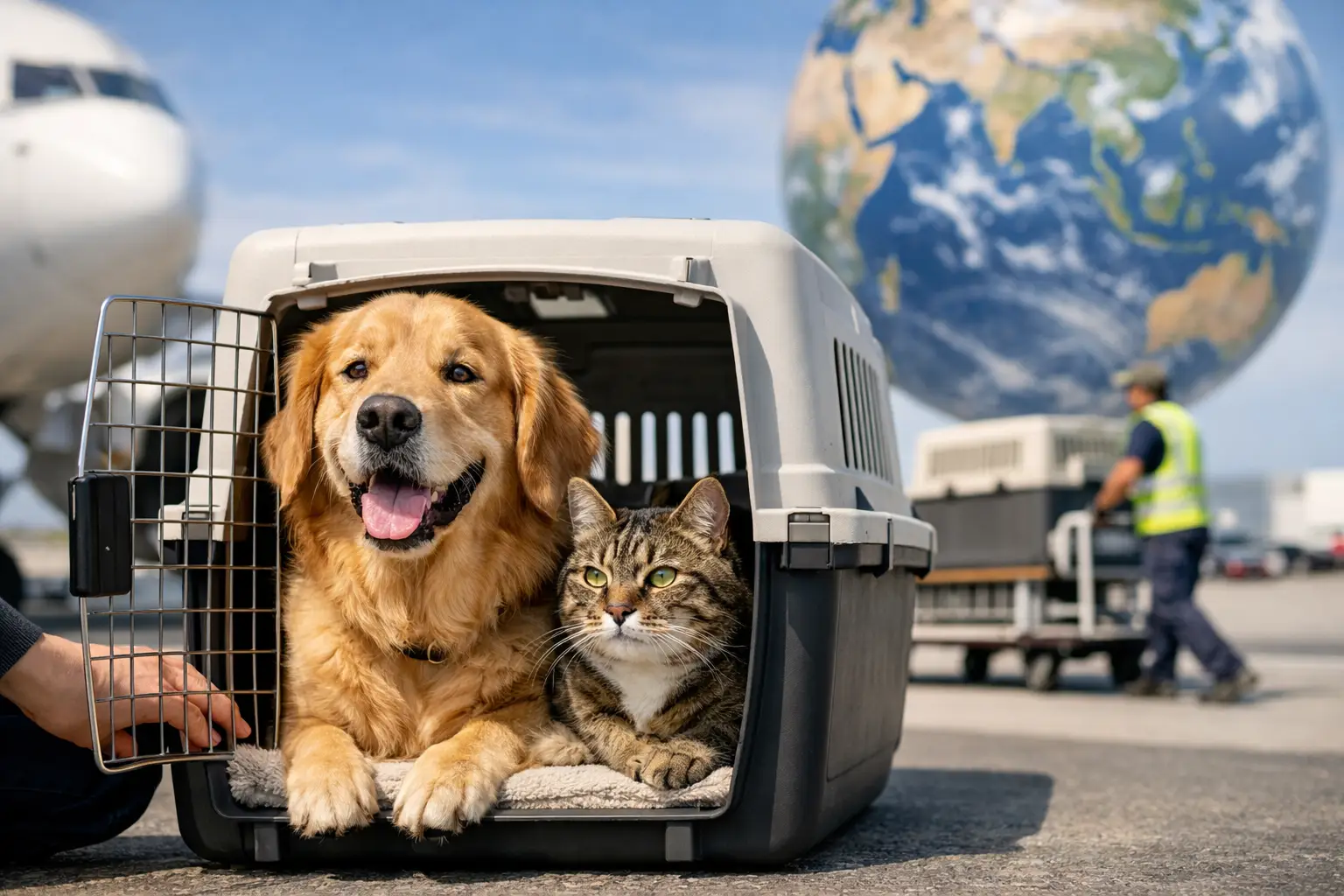
A missed endorsement, an airline crate that does not meet requirements, or a health certificate issued one day too early can disrupt a family’s move. Worldwide pet shipping services exist to prevent those painful last-minute surprises by coordinating the many details that determine whether a pet can travel safely and enter the destination country legally.
For families relocating across borders, pet travel is not simply a flight reservation. It is a carefully timed process involving veterinary preparation, import rules, airline procedures, customs clearance, ground transportation, and a plan that puts the pet’s welfare first. The right support turns a complicated international move into a managed journey, with clear guidance at every stage.
What Worldwide Pet Shipping Services Actually Cover
The scope of international pet transportation depends on the route, species, breed, age, and destination. A straightforward trip may require only a health certificate and airline booking. A move involving rabies-controlled countries, transit points, restricted breeds, or a destination with strict import permits can require months of planning.
Full-service coordination begins by reviewing the pet’s travel profile and the family’s move date. This includes the pet’s vaccination history, microchip status, medical needs, size, travel crate requirements, origin country, final destination, and potential transit locations. From there, a relocation specialist can map the necessary steps in the correct order.
The goal is not to overwhelm owners with paperwork. It is to make sure each document, appointment, and booking supports the next one. When a deadline is missed, a pet may be denied boarding, held at arrival, or required to return to the country of origin. Careful planning protects both the relocation timeline and the pet’s comfort.
Why an Airline Booking Is Only One Part of the Plan
Airline policies matter, but they are only one layer of international pet travel. Airlines set their own rules for crate dimensions, seasonal heat restrictions, accepted breeds, connecting airports, and whether pets travel in cabin, as checked baggage, or through an air cargo program. Availability can also be limited, particularly during busy relocation periods.
Destination authorities have a separate set of requirements. These may include an import permit, government-endorsed health certificate, parasite treatment, proof of rabies vaccination, laboratory testing, advance notice, or inspection on arrival. Requirements can change, and they may differ based on where the pet has lived or traveled recently.
Timing Is a Compliance Requirement
Many pet travel documents are valid for a short period. A veterinary exam might need to occur within a specific number of days before departure, while an import permit could take weeks to obtain. Rabies FAVN titer testing often has longer lead times, especially when a destination requires a waiting period after the blood sample is processed.
This is why international relocation should begin as early as possible. Starting early provides flexibility if a laboratory result is delayed, a flight changes, a document needs correction, or the destination authority requests additional information. It also gives families time to help their pet become comfortable with the travel crate before departure day.
The Shortest Route Is Not Always the Best Route
A direct flight is often preferable, but it is not automatically the best choice for every pet. A direct route may have limited pet capacity, weather restrictions, or an arrival time that complicates customs processing. In other cases, a carefully selected connection may offer better handling facilities, a more appropriate aircraft, or greater flexibility for a large dog.
Route planning should consider total travel time, transfer procedures, layover location, airport infrastructure, climate, airline experience, and the pet’s individual needs. The right route balances efficiency with safety and practical compliance.
How Worldwide Pet Shipping Services Are Planned
A thoughtful relocation plan starts with questions, not assumptions. Is the family moving permanently or temporarily? Is the pet traveling with the owner or separately? Does the destination impose a waiting period after vaccination? Will the pet need to clear customs on arrival, or will a local agent handle the process?
Once those details are known, the travel coordinator creates a sequence of actions. Veterinary requirements are scheduled first when they affect eligibility. Airline options are assessed based on the pet’s measurements and anticipated travel window. Documentation is prepared and reviewed before it is presented for official endorsement or export clearance.
A strong plan also allows room for change. International moves often involve shifting visa appointments, changing housing dates, or altered flight schedules. When travel arrangements need to move, documentation and permits may need to move with them. Responsive communication is not an extra in this process. It is a core part of protecting the relocation.
Preparing the Pet for Travel Day
Crate training is one of the most helpful preparations a family can make. A travel crate should be correctly sized, airline-compliant, secure, and familiar to the pet. The pet should be able to stand, turn around, and lie down comfortably. Introducing the crate gradually at home helps make it a familiar resting space rather than a stressful new experience at the airport.
Owners should also discuss travel readiness with their veterinarian. Pets with medical conditions, anxiety concerns, or very young or senior ages may need additional evaluation. Sedation is generally not a routine solution for air travel and should only be considered under direct veterinary guidance. Safe travel planning focuses on appropriate crate preparation, hydration guidance, suitable flight timing, and clear handling instructions.
Support That Matters at Departure and Arrival
The most stressful moments for many families are handing over a pet at departure and waiting for clearance at arrival. These are also the points where professional coordination has the greatest practical value.
At departure, support may include confirming check-in procedures, reviewing the final document set, coordinating airline acceptance, and making sure the crate meets labeling and handling requirements. For pets departing Central America, export procedures and government endorsements can require local knowledge and precise timing.
At arrival, a pet may need to be collected from a cargo facility, presented to veterinary or agricultural authorities, and cleared through customs before being released. If the owner is arriving on a different flight or cannot attend the clearance process, pre-arranged local support can be especially valuable. It reduces uncertainty and helps avoid delays after a long journey.
For moves involving the United States, requirements can be particularly sensitive when a dog has been in a country classified as high risk for canine rabies. USA CDC requirements, airline procedures, vaccination records, and destination arrangements must align. A small inconsistency can create a major travel problem, so expert review before booking is essential.
What to Expect From a Full-Service Pet Relocation Partner
Not all worldwide pet shipping services provide the same level of support. Some arrange an airline booking only. Others coordinate the journey from the family’s door to the new home. The appropriate level depends on the route and how much responsibility an owner wants to manage personally.
A comprehensive provider should be able to assist with the following:
- A personalized travel assessment based on the pet, route, and destination requirements
- Veterinary document guidance, including microchip, vaccination, health certificate, and rabies titer planning when needed
- Airline and route coordination with attention to crate standards and welfare considerations
- Export, import, customs, and arrival handling support where required
- Regular communication so the family understands what is happening before, during, and after travel
The most meaningful difference is accountability. International pet relocation involves several parties, including veterinarians, airlines, government agencies, customs officials, and ground handlers. A dedicated coordinator helps keep those moving parts connected and gives the family one dependable point of contact.
Questions to Ask Before Choosing a Provider
Before selecting a pet transportation partner, ask whether they have experience with your specific origin and destination countries. Ask who will manage documentation, who will support the pet at each airport, and how changes to flights or regulations will be handled. It is also reasonable to ask how the provider evaluates airline routes and how often you can expect updates.
Experience in regional travel corridors matters. A provider familiar with Central American departures and arrivals understands that local export procedures, government office schedules, and airline handling practices can vary significantly from one country to another. Planet Pet Relocation combines that regional knowledge with worldwide partner coordination, helping families make informed decisions without carrying the administrative burden alone.
Your pet is not a shipment to be processed. They are part of the family moving with you. Begin planning early, keep veterinary records organized, and choose support that treats compliance, communication, and your pet’s well-being as equally important parts of the journey.

