

How to Get a Rabies Titer Test for Travel
July 28th, 2026 | Uncategorized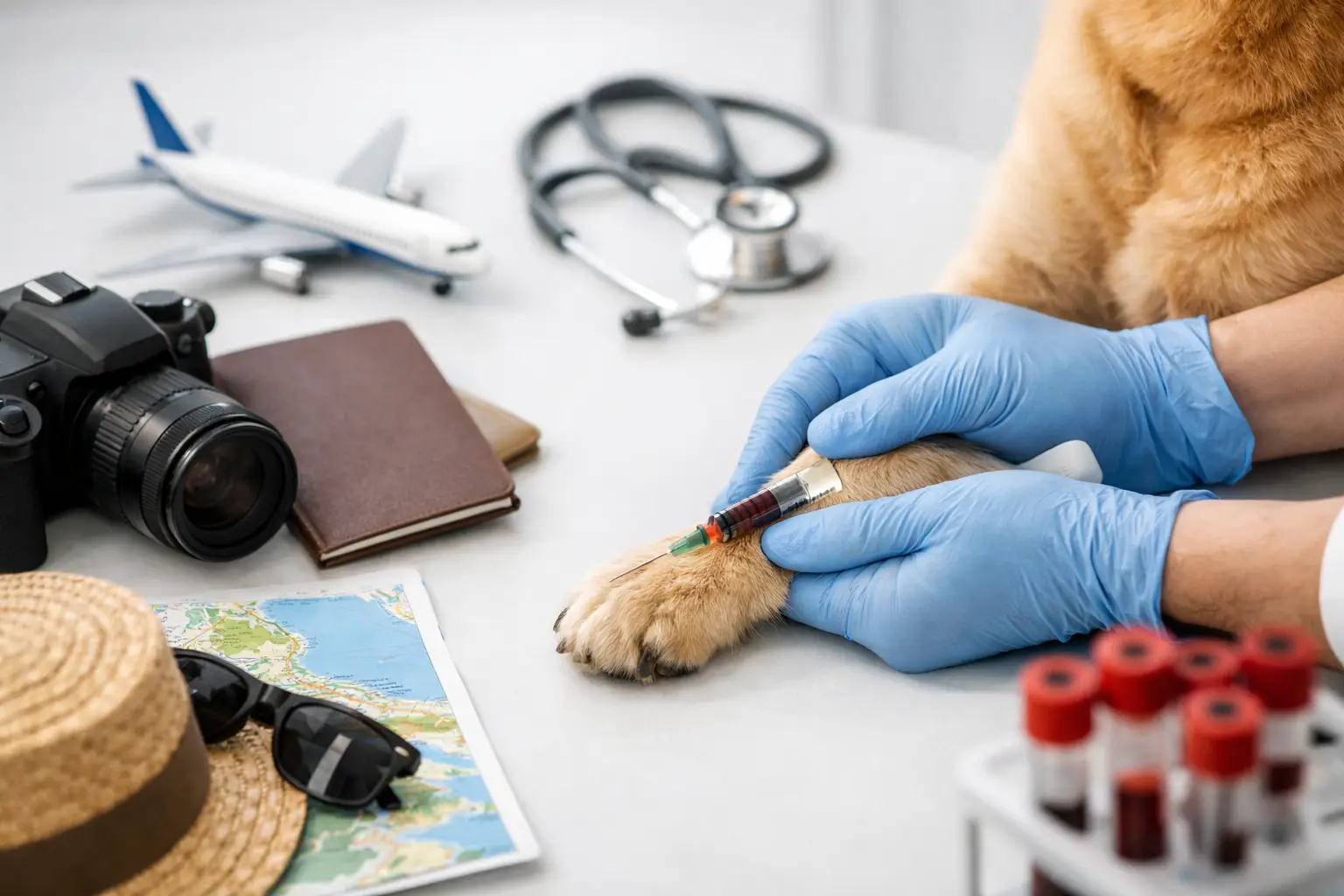
A rabies titer test can be the document that determines whether your pet is cleared to travel or faces a costly delay at the border. The process is manageable when it is planned in the right order, but a blood draw alone is not enough. Knowing how to get a rabies titer test means understanding your destination’s rules, your pet’s vaccination history, the required laboratory, and the waiting period that may follow a passing result.
For families relocating internationally, the most common problem is timing. A test may be completed correctly but still not meet the destination country’s required timeline. Starting early gives you more options, protects your travel schedule, and helps keep your pet’s journey calm and compliant.
What a Rabies Titer Test Measures
A rabies titer test measures the level of rabies antibodies in your pet’s blood after vaccination. It is used by some countries to confirm that a dog or cat has developed an adequate immune response to rabies before entry.
You may also hear it called a rabies antibody test, rabies neutralizing antibody titration test, RNATT, or FAVN test. These terms are related, but the exact test format and approved laboratory can depend on the importing country. Do not assume that any rabies blood test will be accepted for travel.
A passing result is often at least 0.5 IU/mL, but the number is only one part of compliance. Authorities may also review the microchip number, rabies vaccination date, sample collection date, laboratory report, and mandatory wait period. Every detail must align.
How to Get a Rabies Titer Test Step by Step
1. Confirm whether your destination requires one
Before scheduling a veterinary appointment, verify the requirements for the country where your pet will arrive. Some destinations do not require a titer test at all. Others require it only for pets arriving from certain countries, while some have strict rules about approved laboratories and waiting periods.
This is especially relevant for complex moves involving more than one country. A pet traveling from Central America through the United States or Europe, for example, may need documentation that differs from a pet flying directly to its final destination. Transit rules can matter as much as entry rules when a stopover involves a change of airline, airport, or customs status.
Requirements can also differ between dogs and cats, and they may change with little notice. Plan based on the current rules for your exact route rather than on a friend’s previous experience.
2. Check the microchip and rabies vaccination sequence
For most international travel programs, your pet must be microchipped before the rabies vaccination that supports the titer test. The veterinarian should scan the chip at the vaccination appointment and record the full microchip number clearly on the rabies certificate.
If a rabies vaccine was given before the microchip was implanted, that vaccination may not qualify for the destination’s travel process. In that situation, your veterinarian may need to administer a new rabies vaccine after the chip has been placed. This can reset the timeline, so it is better to identify the issue before submitting blood.
Your pet must also have a current, valid rabies vaccination. A lapsed vaccine can create complications even when the titer result is strong. Keep the original rabies certificate, including the vaccine manufacturer, product name, lot number, vaccination date, expiration date, veterinarian signature, and clinic details.
3. Wait until your pet is eligible for the blood draw
Most destinations require a waiting period after rabies vaccination before blood can be collected. The commonly used minimum is 30 days after the primary rabies vaccine, although the rule can vary. A booster given without allowing a prior vaccination to lapse may have different timing rules.
This is one of the reasons a titer test should never be treated as a last-minute task. The timeline may include the post-vaccination wait, laboratory processing, review of the result, and a further waiting period before travel. Depending on the destination, that final wait can be several months.
Your veterinarian can confirm when your pet is medically ready for sampling, but the travel eligibility date should be calculated against the destination’s import rules.
4. Have an authorized veterinarian collect the sample
At the appointment, the veterinarian draws a blood sample and completes the required paperwork. The sample must be correctly labeled and linked to the same microchip number shown on the rabies certificate. Small discrepancies, such as a missing digit or a handwritten number that is difficult to read, can create avoidable questions later.
Ask the clinic how the blood will be prepared and sent. In many cases, the serum must be separated, packaged properly, and shipped to an approved laboratory with a specific submission form. The clinic may handle this process directly, or a pet travel specialist may coordinate the submission and document review.
Keep copies of every record before the sample leaves the clinic. That includes the rabies certificate, microchip record, laboratory submission form, proof of sample collection date, and shipment tracking details when available.
5. Use a laboratory accepted by the importing country
A laboratory report is only useful if the destination recognizes the lab that issued it. Some countries maintain a defined list of approved facilities, while others accept a broader range of accredited laboratories. The laboratory may also have its own packaging instructions, forms, and sample requirements.
Do not select a lab based only on convenience or turnaround time. A test from the wrong facility can mean repeating the entire process. This may add weeks or months if a new waiting period applies.
For pets moving on routes that require a FAVN test, careful coordination is particularly valuable. Planet Pet Relocation helps families confirm the accepted testing pathway, organize documentation, and keep the titer timeline aligned with the rest of the travel plan.
What Happens After a Passing Result
Once the laboratory issues a passing result, review the report immediately. Confirm that the pet’s name, species, microchip number, sample date, and antibody value are correct. The report should be kept with the original vaccination documents and included in the final travel file when required.
A passing result does not always mean your pet can travel immediately. Many countries count a waiting period from the date the blood sample was collected, not from the date the lab report was issued. If the report takes several weeks to return, your pet may still be in the required waiting period even though the result is already available.
The result may remain valid for an extended period if rabies boosters are maintained without a lapse. However, this depends on the destination’s rules and the continuity of the vaccination record. If a booster is missed, authorities may treat the next vaccine as a primary vaccination and require a new titer process.
Common Reasons Rabies Titer Plans Go Off Track
Most delays come from paperwork or sequencing errors, not from the blood test itself. The most frequent issues include a microchip implanted after the recorded rabies vaccine, an expired vaccination, a sample drawn too soon, a report from a non-approved laboratory, or travel booked before the mandatory wait ends.
Names can also cause trouble. Your pet’s name, owner’s name, and microchip number should be consistent across the vaccination certificate, laboratory report, health certificate, airline booking, and import permit. If an owner has changed their surname or is traveling separately from the pet, address that early in the documentation process.
A failed result requires patience. Your veterinarian may recommend revaccination and a later retest, but the right next step depends on your pet’s health history and the destination’s regulations. Avoid guessing or rushing into another sample without confirming the revised timeline.
Build the Titer Test Into the Full Travel Plan
A rabies titer is one piece of a larger international relocation file. Your pet may also need an import permit, government-endorsed health certificate, parasite treatments, airline-approved kennel, export inspection, customs arrangements, or advance airline reservations. These items have different validity periods, which is why they must be scheduled in the right order.
The safest approach is to work backward from the intended arrival date. Identify the destination’s final waiting period first, then allow time for laboratory processing and vaccine eligibility. Add a buffer for appointment availability, document corrections, shipping delays, and airline schedule changes.
Your pet’s travel should not depend on hoping that a document arrives in time. Start the rabies titer process early, keep each record organized, and make decisions based on the rules for your specific route. That preparation gives your family the best chance of arriving together, with your pet safe, comfortable, and ready to begin the next chapter.

