

What Is an IATA Pet Crate for Air Travel?
November 17th, 2026 | Uncategorized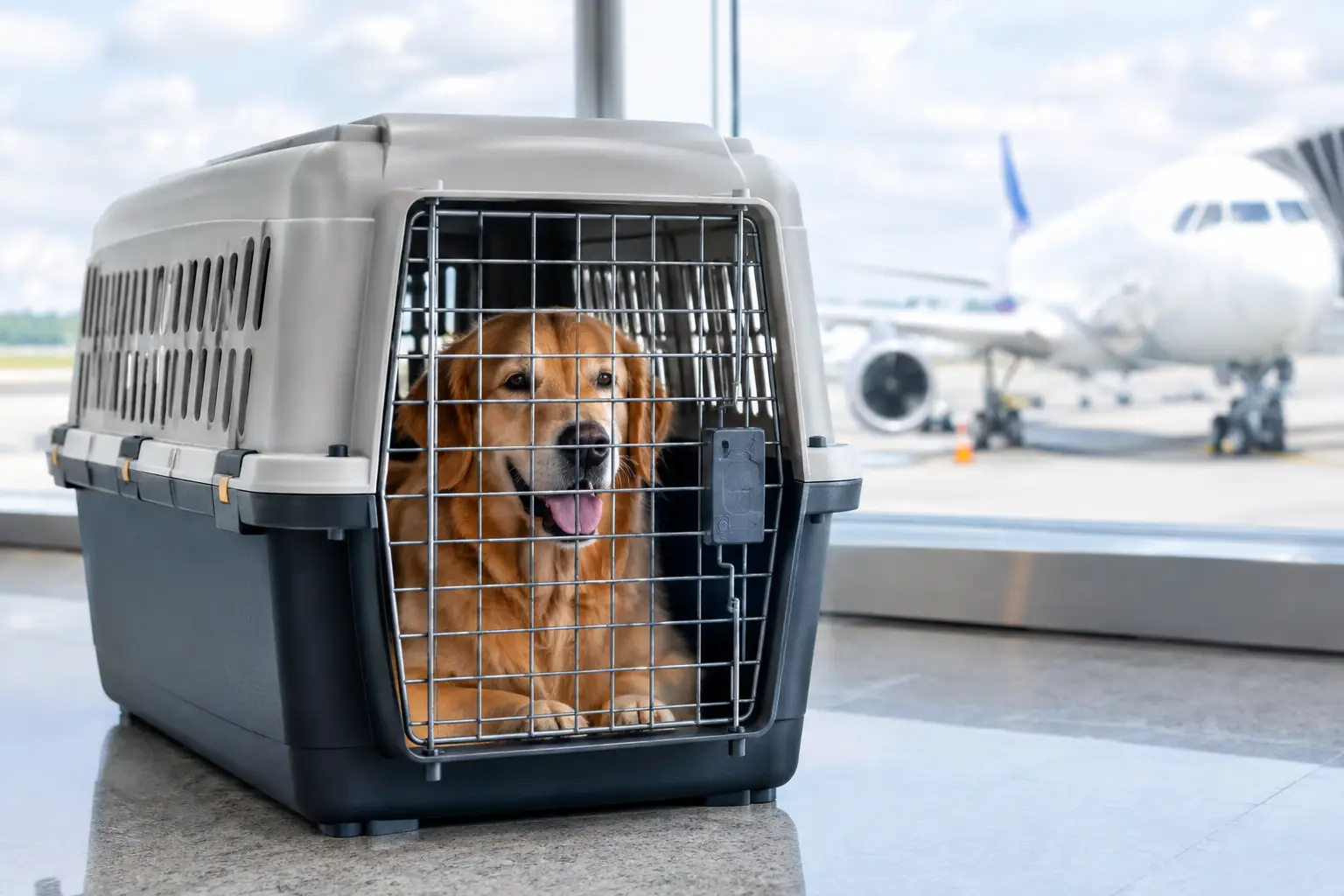
A pet can have the correct health certificate, import permit, and flight booking, then still be turned away at check-in because of the travel crate. So, what is an IATA pet crate? It is a travel kennel designed to meet the container requirements commonly used by airlines for pets flying in the cargo hold. It must provide secure containment, adequate space, ventilation, and protection throughout the journey.
For families relocating internationally, the crate is not a minor detail or just a purchase to make before departure. It is your pet’s travel space for airport handling, flight time, transfers, customs processing, and possible weather-related delays. Choosing and preparing the right one helps protect your pet’s comfort and prevents avoidable airline problems.
What an IATA Pet Crate Really Means
“IATA crate” is commonly used to describe a kennel that follows the International Air Transport Association’s Live Animals Regulations, often called the LAR. These standards guide airlines and animal transportation professionals on the safe movement of live animals by air.
A crucial distinction: IATA does not generally issue an approval label for individual pet crates. A crate marketed as “airline approved” is not automatically acceptable for every route, aircraft, airline, or pet. The airline carrying your pet makes the final decision, and its rules may be more restrictive than the general IATA guidance.
That is why a crate should be evaluated against both the published live-animal container standards and the specific airline’s requirements. Breed, destination, aircraft type, weather conditions, and whether the pet is traveling as checked baggage or air cargo can all affect what is permitted.
The Core Requirements for an IATA-Compliant Pet Crate
For most dogs and cats, the expected crate is a rigid plastic or fiberglass kennel with a solid top and bottom. Soft-sided carriers may work for an in-cabin pet when an airline allows them, but they are not appropriate for pets traveling in the cargo hold.
The door should be made of strong metal, not plastic, and it must close securely. Many airlines require additional hardware, such as metal nuts and bolts fastening the upper and lower crate halves together. Plastic clips alone may not be accepted, even if they came with the kennel.
Ventilation is another essential feature. The crate needs openings on multiple sides so air can circulate during handling and flight. However, the openings must be secure enough to prevent paws, noses, or other body parts from protruding outside the kennel.
Inside, the floor should be solid and leakproof. Absorbent bedding or a crate pad may be used when appropriate, but loose items that can shift, be chewed, or create a hazard should be avoided. The crate should also have attached food and water containers that can be filled from outside without opening the door.
Most compliant crates also need clear live-animal labels, directional arrows showing which side is up, and identification details. Airlines may request feeding instructions, emergency contact information, and copies of required travel documents in a pouch attached to the crate.
Correct Sizing Matters More Than “Roomy”
A crate can be sturdy and well-built yet still be rejected because it is too small. Your pet must be able to stand naturally without their head or ears touching the roof, turn around comfortably, and lie down in a natural position.
Airline sizing calculations usually begin with measurements of your pet’s length, height, and width. For a dog, this often includes measuring from the tip of the nose to the base of the tail and from the ground to the top of the head or ear tips, whichever is higher. Cats need the same practical freedom of movement, even though their crate size is usually smaller.
Bigger is not always better, though. An oversized kennel can make a pet less stable during movement and may exceed an airline’s cargo compartment limits. The right crate is one that gives adequate space while fitting the approved dimensions for the flight.
Snub-nosed breeds deserve particularly careful planning. Bulldogs, pugs, Persian cats, and other brachycephalic breeds may face airline restrictions because their facial structure can make breathing more difficult under stress or warm conditions. A larger kennel may be required when travel is permitted, but some routes or carriers may not accept these pets at all. This is a case where airline approval and welfare planning must come before crate selection.
Features That Can Cause an Airline Refusal
Many pet owners understandably choose a crate based on what looks comfortable or convenient at home. Air travel has different priorities. Wheels, for example, can create instability and are commonly required to be removed or made inoperable before travel.
Top-opening doors, decorative openings, collapsible designs, and crates with weak plastic latches can also be problematic. A kennel may be excellent for car travel or a veterinary visit but unsuitable for cargo transport.
Before the travel date, inspect the crate for cracks, damaged vents, loose fasteners, sharp edges, and a door that does not latch smoothly. A crate in poor condition can be refused even if its original design is appropriate. Do not rely solely on an online product description. Confirm the physical materials, measurements, and closure system yourself or have a pet relocation professional review them.
Preparing the Crate for a Calmer Journey
The best travel crate is one your pet has already learned to trust. Introduce it weeks before departure whenever possible. Leave the door open at home, place familiar bedding inside if airline-appropriate, and offer meals or treats near and eventually inside the crate. The goal is to make the kennel feel like a safe resting place rather than a surprise on travel day.
Avoid sedating a pet unless a veterinarian has specifically advised it and the airline permits it. Sedation can affect balance, breathing, and the body’s ability to regulate temperature at altitude. Airlines frequently discourage it, particularly for cargo travel.
A practical preflight check should confirm the following:
- The crate is the correct size for your pet and the booked airline.
- Metal hardware and the door lock are secure and working properly.
- Water and food dishes are attached and accessible from outside.
- Absorbent material is in place without creating a chewing or choking risk.
- Labels, contact details, and required documents are complete and protected.
Plan a calm exercise and bathroom break before leaving for the airport. Arrive according to the airline’s live-animal check-in instructions, which can be earlier than standard passenger check-in. Last-minute crate modifications at an airport are stressful and may not be possible.
Why International Routes Need Extra Coordination
On an international move, the crate requirements are only one part of a larger travel plan. Import rules, veterinary certificates, vaccination timing, transit-country regulations, and customs procedures must all align with the flight itinerary. A route with multiple connections can introduce different airline policies and different handling environments.
This matters especially for moves involving Central America, the United States, and other destinations with detailed animal import controls. A crate accepted on the departing flight does not eliminate the need for accurate documentation or destination-specific preparation. Conversely, perfect paperwork does not solve a crate issue at the airport.
Experienced coordination looks at the whole journey: the pet’s breed and size, available aircraft, connection times, seasonal temperatures, required documents, and receiving arrangements. At Planet Pet Relocation, this planning is approached as a welfare and compliance decision, not simply a booking task.
When to Ask for Professional Help
A straightforward direct flight with a small dog or cat may be manageable for some experienced travelers. Even then, airline policies can change and crate rules should be verified close to departure. Support becomes especially valuable when a pet has a complex route, a large crate, a restricted breed, a tight relocation schedule, or a destination with demanding import procedures.
A qualified pet travel specialist can review crate dimensions, confirm airline-specific requirements, coordinate cargo arrangements where needed, and help prevent documentation and handling gaps. That guidance can make a meaningful difference when your pet’s travel plan crosses borders, airlines, and customs systems.
Your pet’s crate is their protected space during one of the biggest transitions your family may make. Give it the same careful attention as the flight plan, and make every decision around a kennel that is secure, properly sized, airline-accepted, and familiar enough to help your companion travel with greater comfort.

