

Pet Shipping Stress Reduction Tips That Work
November 5th, 2026 | Uncategorized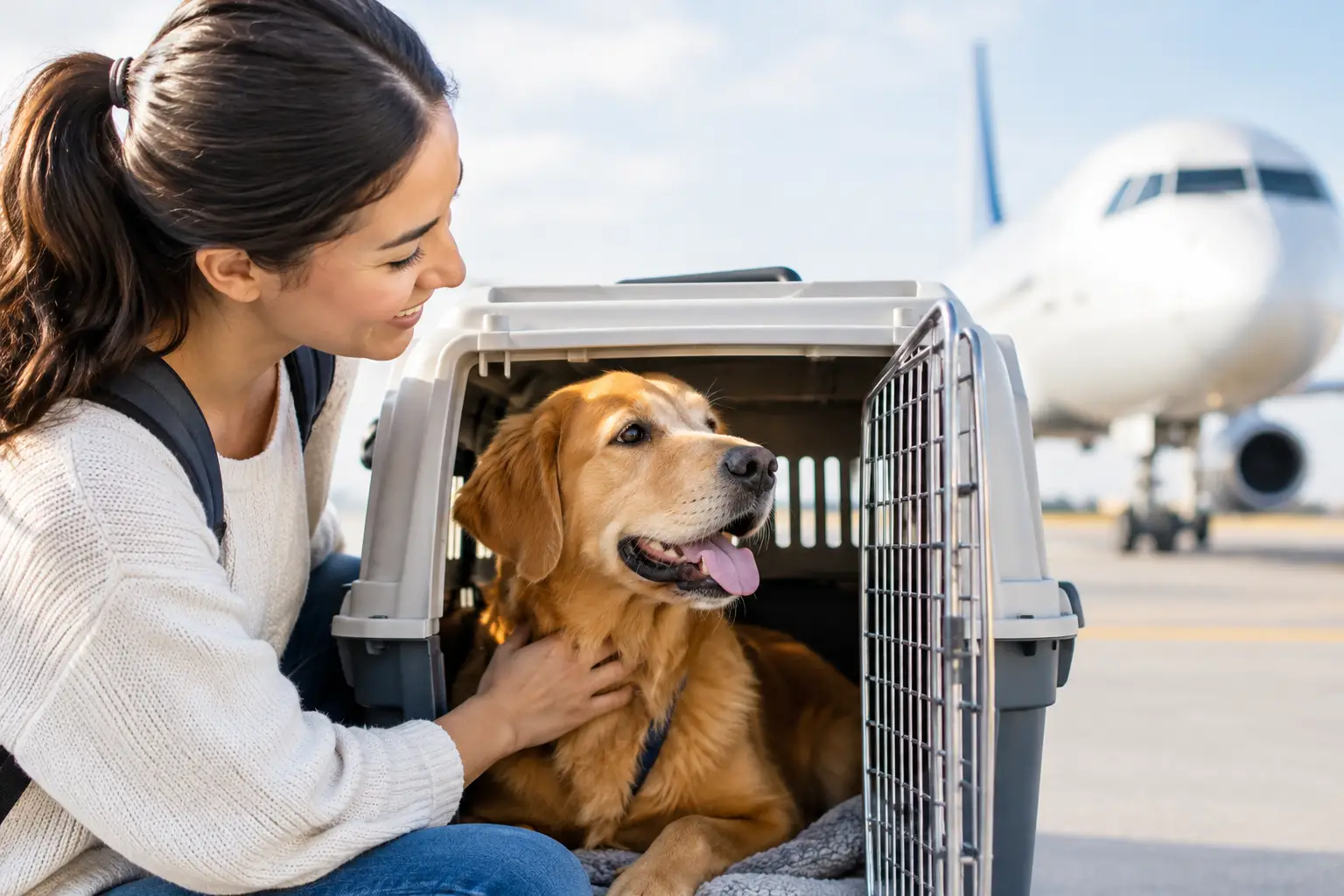
A pet’s travel day begins long before the airport. The unfamiliar crate, changes in household routines, veterinary visits, and the emotions of a family move can all affect how an animal responds. The most effective pet shipping stress reduction tips focus on preparation, predictable care, and a travel plan built around the pet’s individual needs – not simply getting from one country to another.
For international moves, the paperwork and routing matter just as much as the crate. A missed document, poorly timed veterinary appointment, or tight connection can create delays that add unnecessary pressure for pets and their families. Careful coordination helps protect both compliance and comfort.
Pet Shipping Stress Reduction Tips Before Travel
The goal before travel is not to make every new experience exciting. It is to make the travel process familiar enough that it does not feel threatening. Start planning as early as possible, especially when a destination has import permits, rabies requirements, titer testing, or specific health certificate timelines.
Make the travel crate a familiar place
A correctly sized, airline-compliant travel crate is essential, but simply purchasing the crate is not enough. Bring it into your home weeks before departure and leave the door open in a quiet area. Add a familiar blanket or bedding only when permitted and safe for the travel plan, and encourage your pet to enter voluntarily with calm praise or favorite treats.
Gradually build positive time inside the crate. Begin with a few minutes while you remain nearby, then extend the time as your pet settles. For dogs and cats that are especially crate-sensitive, slow conditioning can make a meaningful difference. Never wait until departure morning to introduce the crate.
The right fit matters. Your pet should be able to stand, turn around, and lie down naturally. A crate that is too small compromises comfort; one that is excessively large may make it harder for an animal to feel stable during handling and transport.
Keep routines steady at home
Moving often turns daily life upside down. Boxes appear, familiar furniture disappears, and family schedules become unpredictable. While some disruption is unavoidable, preserve regular feeding, walking, play, and sleep routines as much as possible in the days before travel.
This is particularly helpful for pets who respond to change through appetite loss, hiding, vocalization, or digestive upset. A familiar schedule gives them reassuring signals that they are safe, even while the household is preparing for a major transition.
Schedule veterinary care with the destination timeline in mind
International travel documents are time-sensitive. Vaccinations, parasite treatments, health certificates, laboratory testing, endorsements, and import permits may need to occur in a specific order. Trying to complete these steps at the last minute creates stress for everyone and can put travel plans at risk.
Work with your veterinarian and relocation coordinator early. Share your destination, planned route, pet’s age, breed, medical history, and vaccination records. If your pet has a chronic condition, discuss how it will be managed during the journey and immediately after arrival.
Avoid making assumptions based on a previous move or advice from a friend. Rules can vary by country, species, route, and the pet’s travel history. Requirements may also change, particularly for dogs entering the United States from countries affected by CDC high-risk dog import rules.
Choose a Route That Supports Pet Welfare
The fastest itinerary is not always the calmest one. A route with fewer connections, practical layover timing, reliable airline handling, and appropriate weather planning can be a better choice than a lower-effort booking that creates long waits or complicated transfers.
For a move involving Central America, route availability can vary widely by origin, destination, season, and airline. Some pets may travel comfortably on a direct or simple connection, while others need more careful planning because of breed considerations, temperature restrictions, or required customs procedures. This is where professional route review adds real value.
Plan for weather, timing, and transfers
Airline restrictions often protect animals from extreme heat or cold. Those restrictions can affect which flights are available and when a pet can travel. They should be treated as a welfare safeguard, not an inconvenience to work around.
When evaluating an itinerary, consider the full chain of custody: pickup, airport arrival, security procedures, airline acceptance, connections, customs clearance, and final delivery. A travel plan should allow realistic time for each stage. Rushed handoffs are stressful for owners and can increase the chance of errors.
Whenever possible, avoid unnecessary overnight stops, multiple airline changes, and very short connections. There are cases where a longer connection is appropriate, but it must be planned with clear responsibility for the pet’s care and documentation at every step.
Prepare Travel Day Without Overstimulating Your Pet
A calm departure begins with a quiet morning. Give your pet normal, gentle activity appropriate for their age and health. For many dogs, a relaxed walk before leaving home can help them settle. Cats may do better in a familiar, low-noise room until it is time to depart.
Feed according to guidance from your veterinarian and transport professional. A large meal immediately before a journey may not be suitable for every pet, particularly those prone to motion sickness or anxiety. Hydration remains important, but the right approach depends on the species, travel duration, health status, and airline procedures.
Use secure identification that matches travel documents. Your pet should have an up-to-date microchip where required, and the crate should be clearly labeled with the required contact and handling information. Keep your own documents organized and readily available so you are not searching for paperwork during an emotional goodbye.
Sedation is not a standard solution for travel anxiety. Many airlines discourage or restrict sedating animals because medications can affect balance, breathing, and temperature regulation at altitude. If anxiety is a concern, discuss it well in advance with your veterinarian. A veterinarian can assess your pet’s health and advise whether any treatment is appropriate for that individual animal.
Communicate Clearly During International Pet Travel
Uncertainty is one of the hardest parts of international relocation. Owners want to know where their pet is, what happens next, and who is responsible if plans change. Clear communication reduces stress for people, which also helps them make better decisions for their pets.
A full-service relocation plan should identify the key milestones: document completion, pickup timing, airline check-in, flight departure, arrival procedures, customs handling, and final reunification. Ask who will monitor the booking, who can respond to airline changes, and what contingency planning is in place if a flight is delayed or rescheduled.
At Planet Pet Relocation, this coordination is approached as both a compliance responsibility and a care responsibility. Each pet’s itinerary is shaped around the practical details that influence welfare, including documentation timing, routing, handoffs, and destination entry requirements.
Help Your Pet Settle After Arrival
The journey does not end when the plane lands. Arrival can be disorienting, especially after a long flight, customs clearance, and entry into an unfamiliar home. Give your pet a quiet, secure space with water, familiar bedding, and a chance to decompress before introducing new people, animals, or busy surroundings.
For dogs, keep the first walks calm and short while they adjust to local sounds, scents, and climate. For cats, begin with one safe room rather than giving immediate access to an entire new home. Maintain familiar food when possible, unless a veterinarian recommends a transition.
Watch for signs that merit veterinary attention, such as repeated vomiting, persistent diarrhea, labored breathing, unusual lethargy, refusal to drink, or behavior that seems significantly different from your pet’s normal response to stress. A little adjustment time is common; ongoing distress should not be ignored.
A well-planned pet relocation cannot remove every unfamiliar moment, but it can prevent many avoidable ones. When preparation, compliance, thoughtful routing, and compassionate handling work together, pets have the best possible chance to arrive safely and begin feeling at home again.

