

Can Dogs Fly Internationally Safely? What to Know
August 27th, 2026 | Uncategorized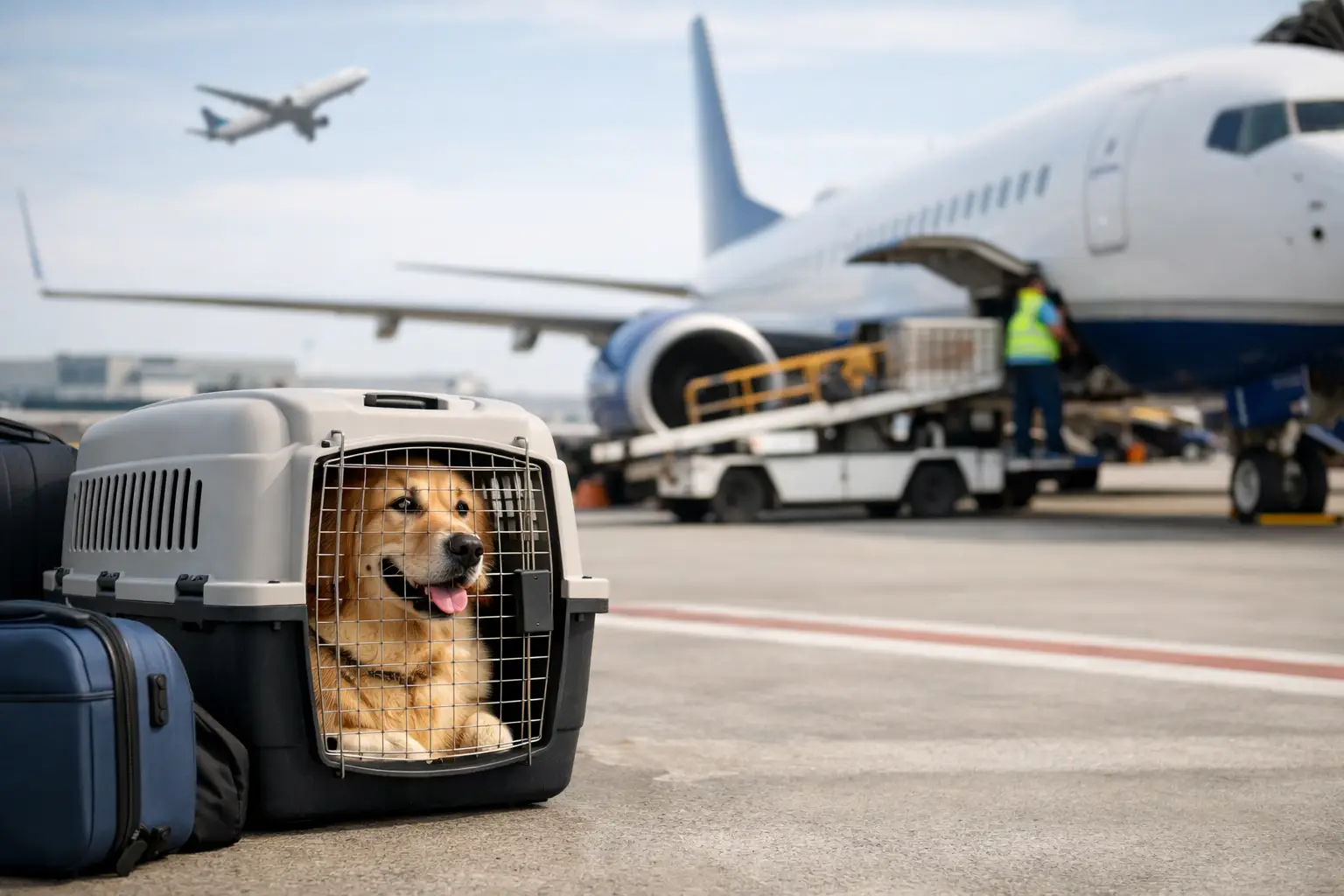
A move overseas can mean a new home, a new job, and a long list of decisions. For pet owners, the most personal question is often the simplest: can dogs fly internationally safely? In many cases, yes. Thousands of dogs travel internationally each year without incident. But safe travel is not automatic. It depends on your dog’s health, the route, the airline’s procedures, the travel crate, weather conditions, and correct documentation at both ends of the journey.
The goal should never be to get a dog on the fastest available flight at any cost. The right plan is one that meets destination rules while giving your pet the safest, calmest, and most practical journey possible.
Can Dogs Fly Internationally Safely? It Depends on the Plan
Air travel has well-established systems for transporting animals, including climate-controlled airport facilities, airline acceptance procedures, and handling protocols. Still, every dog is different, and every international route brings its own variables.
A healthy dog traveling on a well-planned itinerary is in a very different position from a dog booked at the last minute on a route with multiple tight connections, excessive ground time, or unclear import requirements. A safe international move begins weeks or sometimes months before departure, not at the airport check-in counter.
Age, breed, medical history, temperament, and destination all matter. Very young puppies, senior dogs, dogs with serious medical conditions, and brachycephalic breeds with short noses may need additional veterinary review or may not be suitable for certain flight conditions. Airlines can also have breed-specific restrictions, particularly for snub-nosed breeds, because of their greater sensitivity to heat and respiratory stress.
A veterinarian who knows your dog should assess fitness to travel. A pet relocation specialist can then turn that medical guidance into a workable travel plan that aligns with airline and government requirements.
The Safest Travel Option Is Not Always the Same
Dogs may travel in the cabin, as checked baggage on eligible routes, or as manifest cargo. The available option depends on the dog’s size, the airline, the country of origin and destination, and the overall itinerary.
For a small dog, traveling in the cabin with its owner can be an appropriate choice when permitted. However, cabin travel has strict carrier-size limits and may not be available on every international route. It can also be challenging when a journey includes airline changes, long connections, or countries with different entry procedures.
Larger dogs commonly travel as manifest cargo. The word “cargo” can sound concerning, but it does not mean a dog is treated like ordinary freight. When managed correctly, pets are transported in approved crates and handled under specific live-animal procedures. On many routes, this is the only compliant option for medium and large dogs, as well as pets traveling separately from their owners.
What matters most is not the label attached to the booking. It is whether the airline is suitable, the routing is realistic, the crate is correct, and trained staff have clear instructions throughout the journey.
Route Planning Protects Your Dog From Avoidable Stress
The shortest itinerary on a booking screen is not always the safest itinerary for a pet. A direct flight is usually preferred because it reduces handling and eliminates transfer risk. When a direct flight is not possible, the quality of the connection matters more than simply keeping the layover short.
A safe connection provides enough time for the pet to be transferred properly, particularly when airlines, terminals, or customs procedures change. It also avoids unnecessarily long waiting periods in a busy airport environment. Some countries require pets to clear customs at the first point of entry, while others allow them to continue to a final destination. Those details shape the route.
Weather is another major consideration. Airlines may limit or suspend pet travel during periods of extreme heat or cold, especially when airport ground operations could expose an animal to unsafe temperatures. This is one reason experienced planning includes backup options. A flight that appears ideal in January may be unsuitable in July.
For families relocating to or from Central America, routes can also involve regional aircraft, limited airline schedules, or transit points with specific handling rules. Planning around those realities can prevent rushed connections, documentation issues, and avoidable changes on travel day.
A Proper Travel Crate Is a Safety Requirement
The travel crate is your dog’s protected space during the journey. It must meet airline and international live-animal transport standards, but technical approval alone is not enough. Your dog also needs enough room to stand naturally, turn around, and lie down comfortably.
Crate training before travel can make a meaningful difference. A dog that sees the crate as a familiar resting place is generally better prepared than one encountering it for the first time at the airport. Begin gradually: leave the crate open at home, add a familiar blanket if permitted, offer meals near or inside it, and build up to short periods with the door closed.
The crate should be sturdy, secure, well ventilated, and correctly assembled. Food and water containers must be accessible from outside the crate, and absorbent bedding can help keep your dog comfortable. Avoid filling the crate with loose items that could shift during handling. Airlines may have additional rules about crate materials, fasteners, wheels, and labeling.
Documentation Is Part of Travel Safety
Missing or incorrect paperwork can create one of the most stressful situations a pet owner can face: a dog ready to travel but unable to board, enter the destination, or clear customs. In serious cases, errors can lead to delays, quarantine, return transport, or denied entry.
Requirements vary by country and can include a microchip, rabies vaccination, government-endorsed health certificate, import permit, parasite treatments, and laboratory testing. For travel involving the United States, certain dogs may also need to meet CDC requirements based on where they have been during the relevant period. Some destinations require a rabies antibody titer test, often called a FAVN test, with lead times that must be built into the move schedule.
The sequence matters. A rabies vaccine given before a microchip, a health certificate issued outside the permitted window, or an incorrect name on a document can affect compliance. Documentation is not just administrative work. It is what allows authorities and airlines to confirm that your pet can travel and enter safely.
Preparing Your Dog for Flight Day
Keep your dog’s routine as normal as possible in the days before departure. Regular walks, familiar food, and calm handling are generally more helpful than dramatic last-minute changes. Your veterinarian can advise on feeding and water based on your dog’s age, health, and flight length.
Sedation is usually not recommended for air travel unless a veterinarian specifically determines otherwise. Sedatives can affect balance, breathing, and a dog’s ability to respond to changes in the travel environment. If your dog is anxious, discuss crate conditioning and behavior support well in advance rather than relying on medication on departure day.
On travel day, allow extra time. Your dog may need to be accepted at a dedicated cargo facility rather than a regular passenger check-in desk. Confirm the arrival process as carefully as the departure process. Depending on the destination, someone may need to meet the flight, complete customs steps, present original documents, or arrange approved onward transport.
When Professional Coordination Makes Sense
International pet travel involves several parties that do not always communicate directly with one another: veterinarians, government offices, laboratories, airlines, airport handlers, customs officials, and destination agents. Owners can manage some straightforward moves independently, particularly if the route is direct and the destination has simple requirements.
Professional support becomes especially valuable when a move involves cargo transport, complex import rules, multiple countries, strict timelines, a FAVN titer test, or U.S. high-risk dog import requirements. A coordinated plan helps ensure that veterinary appointments, documents, bookings, crate specifications, and destination clearance all work together.
Planet Pet Relocation provides this kind of end-to-end coordination for families moving with pets internationally, with particular experience in Central American travel corridors. The focus is not simply arranging a booking. It is identifying the route and process that give each pet the best practical conditions for a compliant journey.
Your dog does not need to understand airline schedules or customs forms to feel the effect of good planning. Familiar preparation, an appropriate crate, careful routing, and knowledgeable support give your companion the best chance to arrive safely and begin the next chapter by your side.

